Mostrando entradas con la etiqueta Gli Incogniti. Mostrar todas las entradas

jueves, 9 de enero de 2020

Gli Incogniti / Amandine Beyer CORELLI The Complete Concerti Grossi


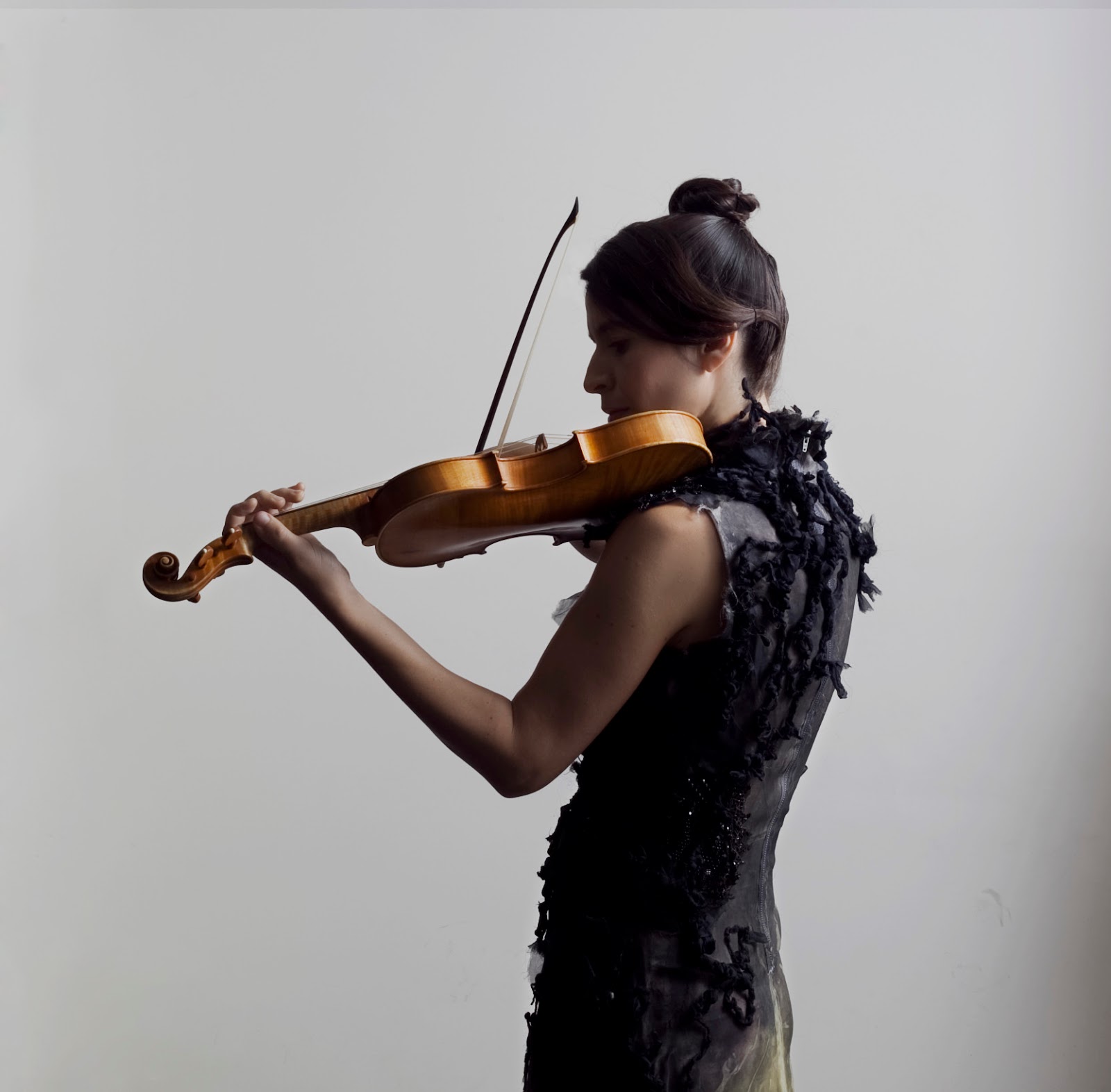
 Amandine Beyer


                                Gli Incogniti

ARCANGELO CORELLI (1653-1713)
Concerto da chiesa Op.VI no.7 in D major
Concerto da camera Op.VI no.9 in F major
Sinfonia, WoO 1, to the oratorio Santa Beatrice d’Este in D minor
Concerto da chiesa Op.VI no.4 in D major
Concerto da camera Op.VI no.11 in B-flat major
Concerto da chiesa Op.VI no.2 in F major
Concerto da chiesa Op.VI no.8 in G minor, « Fatto per la notte di Natale »
Concerto da chiesa Op.VI no.6 in F major
Sonata a quattro in G minor, WoO 2
Concerto da camera Op.VI no.10 in C major
Concerto da chiesa Op.VI no.5 in B-flat major
Concerto da camera Op.VI no.12 in F major
Concerto da chiesa Op.VI no.3 in C minor
Concerto da chiesa Op.VI no.1 in D major

sábado, 27 de octubre de 2018

Marco Ceccato / Amandine Beyer / Gli Incogniti JOSEPH HAYDN Concerti per Esterházy

During his first years in the service of the Esterházy princes, Joseph Haydn had every opportunity to show what he was capable of accomplishing as both instrumental soloist (on violin or keyboard!) and composer; in fact, all his concertos, most of which date from the 1760s, offer a glimpse of a brilliant artist who gradually moved away from the style galant by inventing a new musical dialogue soon to become the Classical style. Tailor-made for specific virtuosos in Haydn's time, these works now receive the undivided attention of Gli Incogniti with their inspired soloists Amandine Beyer and Marco Ceccato. Their enthusiasm for this delightful and demanding music is irresistible!

viernes, 23 de septiembre de 2016

Amandine Beyer / Giuliano Carmignola / Gli Incogniti ANTONIO VIVALDI Concerti per Due Violini

Playing and recording Vivaldi’s concertos for two violins, I came to realise how much deeper my love for this repertory and this composer becomes with each new experience. 
Beyond the notes and the formal stereotype, Vivaldi seems to me to be a composer endowed with humanity and a profound sense of the harmony of beings with nature. Whether he is composing for orchestra, for voice, for different solo instruments or, as here, for two violins, he always takes care to bring out the beauty of colours (of both timbres and harmonies), the wealth of combinations, and the versatility of the instruments which he puts through infinite transformations. 
Here, in the interplay between the two violins and their partners in the orchestra, we witness all kinds of metamorphoses, and it’s a pleasure that I find hard to explain in words. The pleasure of dialoguing with Giuliano Carmignola, the enchanter who can give each note a diamantine reflection and each rhythm an infinite, joyous suppleness; the pleasure of turning into a bird into a bird that plays with others in its flock or sings in echo, of melting into a river like a drop of water tossed by the raging current, of feeling like a blade of grass in the breeze, like a splinter of glass illuminating a fleeting moment, a stone tumbling down a steep slope after its predecessor or a particle of the cascade that shoots forth like the ‘wasserfall’ in Rimbaud’s poem.1 Vivaldi has a gift for letting flowers say their name. And for letting us hear them. (Amandine Beyer)

lunes, 18 de julio de 2016

Gli Incogniti / Amandine Beyer PACHELBEL Un orage d'avril

The title of this release and the glowering skyscape on its cover are pure marketing – the piece from which the title comes is not about April weather at all – but I don’t think anyone lured by it into buying a disc of 17th-century chamber music need feel aggrieved. We don’t get enough reminders that Pachelbel was a real composer of quality chamber music, yet here is his complete Musikalische Ergötzung of 1695, consisting of six ‘Parthien’ (or suites) for two violins and continuo. Add in a seventh, unpublished suite, six secular songs and the Canon and Gigue, and these are ‘musical pleasures’ indeed.
If April is a red herring, the presence elsewhere in the artwork of Brueghel is more apt, for Pachelbel’s music has a strong sense of connection with the world. The songs deal feelingly with death, the perfidy of princes (that’s the April showers one), ‘Good Councillor Walther’ and a nameless patron, while the suites, for all their restless counterpoint, never lose touch with their grounded choreographic roots. Fine music, then, but not rarefied.
In Gli Incogniti it finds itself in expert hands. There is depth and sweetness to their sound, clarity and busyness to their counterpoint, and buoyancy to their expression of rhythm and line. They are as able to inhabit serious melancholy (in Partie IV for instance) as to access a sense of fun for dances such as the Aria of the ‘Partie a 4’ (to which they add a rat-a-tat finger-on-wood accompaniment) or in the occasional playful burst of pizzicato. Likewise, in the unassumingly strophic songs, they can quickly summon a mood, most movingly when viola-comforted death is the subject; Hans Jörg Mammel’s clear but plangent tenor helps, though I wish he had more ease of movement. The Canon is intelligently done, its slowly changing countenance subtly observed, and closing not in grandiose climax but gentle farewell. Less chiselled than London Baroque’s muscly 1994 recording, and more in tune than that of Les Cyclopes (7/95), this release is well worth your time. (Lindsay Kemp / Gramophone)

miércoles, 11 de noviembre de 2015

Amandine Beyer / Gli Incogniti ANTONIO VIVALDI Teatro alla Moda

Since 2006 Gli Incogniti is a reference in the early music interpretation. Convinced that one should share what one loves and enjoys, GI performances (live or recording) try to transmit the passion of the music they are executing. Public and critics have recognized with insistence the « pleasure » of its members when shearing their interpretations. Gli Incogniti is interested in repertoire not so much explored achieving premiere recordings of works of N.Matteis, J. Rosenmuller or even A. Vivaldi. They also enjoy more « clasical » works like the recording of the Concerti Grossi of Corelli or the Four Seasons of Vivaldi, both recordings awarded by many international critics (Diapason d’or, Choc de Clasica, Gramophone Editor’s choise, Preis der Deutschen Schallplattenkritik..). Gli Incongiti has performed concerts in Europe, Asia and America, playing in the most prestigious music halls and Festivals in the world (Utrecht, Sablé, Bruge, Theatre de la Ville, Bozar, Haut-Jura, Inssbruck, Boston, Regensburg, Urbino, Via Stellae, Povoa de Varzim...)

Already some years ago, Amandine Beyer is recognized as a reference in the interpretation baroque violin repertoire. Her recording of the Sonatas & Partitas by J. S. Bach in 2012, has been awarded the best international critics (Diapason d’or de l’année, Choc de Classica de l’année, Editor’s choice de Gramophone, Prix Academie Charles Cros, Excepcional de Scherzo....). The work in this masterpiece is being continued with the performance "Partita 2", choreographed and danced by Anne Theresa de Keersmaeker and Boris Charmatz. She plays regularly in the most important halls and festivals worldwide (Théatre du Chatelet, Festival de Sablé, Innsbruck Festwochen Konzerthaus de Viena...). She shares her time between between different music ensembles were she takes part off : les Cornets Noirs, the duos with Pierre Hantai, Kristian Bezuidenhout or Laurance Beyer and her own ensemble: Gli Incogniti (their CD's devoted to Vivaldi's Four Seasons and Corelli's Concerti Grossi have been welcomed by the international critic as new highlights in the performance of this repertoire). Her other passion is teaching, giving lessons at the ESMAE of Porto (Portugal), as well as masterclasses worldwide (France, Taiwan, Brasil, USA, Canada). Since 2010 she teachs baroque violin at the Schola Cantorum Basiliensis in Switzerland.