
Mostrando entradas con la etiqueta Carolyn Sampson. Mostrar todas las entradas
Mostrando entradas con la etiqueta Carolyn Sampson. Mostrar todas las entradas
lunes, 27 de julio de 2020

martes, 9 de junio de 2020

lunes, 17 de febrero de 2020

sábado, 6 de abril de 2019
Carolyn Sampson / Joseph Middleton REASON IN MADNESS
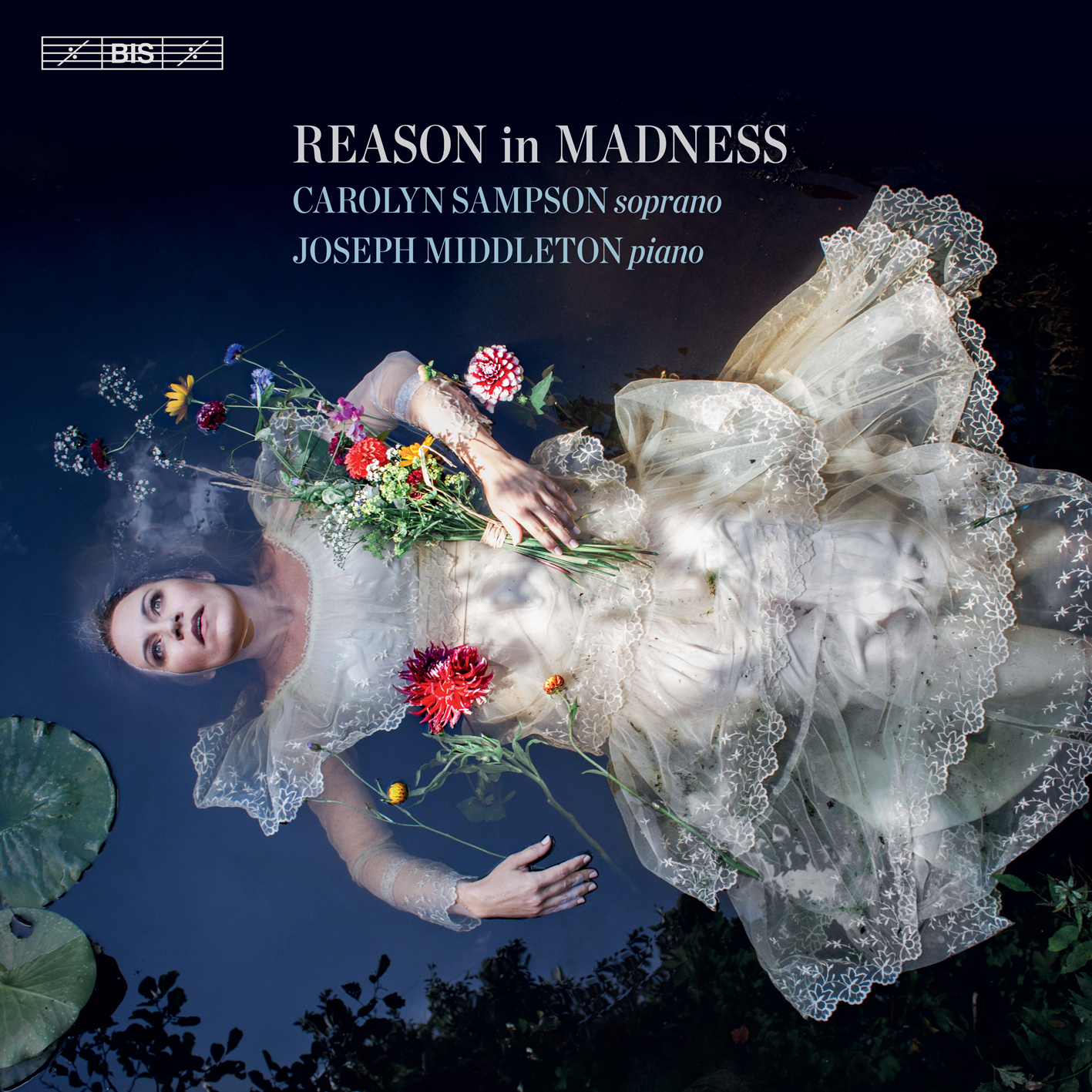 Throughout history men have feared madwomen, burning them as witches,
confining them in asylums and subjecting them to psychoanalysis – yet,
they have also been fascinated, unable to resist fantasizing about them.
For their new disc, Carolyn Sampson and Joseph Middleton have created a
programme that explores
the responses of a variety of composers to women whose stories have left
them vulnerable and exposed. As a motto they have chosen an aphorism by
Nietzsche: ‘There is always some madness in love, but there is also
always some reason in madness.’
Throughout history men have feared madwomen, burning them as witches,
confining them in asylums and subjecting them to psychoanalysis – yet,
they have also been fascinated, unable to resist fantasizing about them.
For their new disc, Carolyn Sampson and Joseph Middleton have created a
programme that explores
the responses of a variety of composers to women whose stories have left
them vulnerable and exposed. As a motto they have chosen an aphorism by
Nietzsche: ‘There is always some madness in love, but there is also
always some reason in madness.’ Brahms’ Ophelia Songs, composed for a stage production of Hamlet, appear next to those by Richard Strauss and Chausson, while Ophelia's death is described by both Schumann (in Herzeleid) and Saint-Saëns. Goethe’s mysterious and traumatized Mignon appears in settings by Hugo Wolf as well as Duparc, while his ill-used Gretchen grieves by her spinning-wheel in Schubert's matchless setting. Sadness and madness tip into witchery and unbridled eroticism with Pierre Louÿs's poems about Bilitis, set by Kœchlin and Debussy. Sampson and Middleton end their recital as it began, with a suicide by drowning: in Poulenc’s monologue La Dame de Monte-Carlo, the elderly female protagonist has been unlucky at the gambling tables and decides to throw herself into the sea.
viernes, 11 de mayo de 2018
Carolyn Sampson / Joseph Middleton A SOPRANO'S SCHUBERTIADE

Schubert’s empathy with women is everywhere evident in his body of
songs, which include songs to, by, about and for women. Devised by
Carolyn Sampson and Joseph Middleton, the present recital brings us each
of those possibilities and more.
The playwright Helmina von Chézy wrote the text to the tender Romanze, intending it for her play Rosamunde, Princess of Cyprus to which Schubert composed incidental music. Another female author, Marianne von Willemer, wrote the two Suleika poems for Goethe, who included them (under his own name) in the collection West-östlicher Divan. And no less than seven of the other songs on the disc are also associated with Goethe, and his characters Mignon (from Wilhelm Meisters Lehrjahre) and Gretchen (from Faust). Schubert was for a while almost obsessed with the mysterious and waif-like Mignon, making several settings of the poems associated with her. Less of an enigma but equally moving, Schubert’s Gretchen sings of awakening desire (Gretchen am Spinnrade) and laments her coming disgrace (Gretchens Bitte).
Carolyn Sampson and Joseph Middleton have collaborated on several acclaimed projects for BIS, most recently with the counter-tenor Iestyn Davies as their companion. Here they close their Soprano’s Schubertiade with three settings of poems by Walter Scott, albeit in German translations. The three ‘Ellen Songs’ are from the verse-romance The Lady of the Lake from 1810, with the last one, ‘Schubert’s Ave Maria’, being one of the composer’s best-known and most loved compositions.
The playwright Helmina von Chézy wrote the text to the tender Romanze, intending it for her play Rosamunde, Princess of Cyprus to which Schubert composed incidental music. Another female author, Marianne von Willemer, wrote the two Suleika poems for Goethe, who included them (under his own name) in the collection West-östlicher Divan. And no less than seven of the other songs on the disc are also associated with Goethe, and his characters Mignon (from Wilhelm Meisters Lehrjahre) and Gretchen (from Faust). Schubert was for a while almost obsessed with the mysterious and waif-like Mignon, making several settings of the poems associated with her. Less of an enigma but equally moving, Schubert’s Gretchen sings of awakening desire (Gretchen am Spinnrade) and laments her coming disgrace (Gretchens Bitte).
Carolyn Sampson and Joseph Middleton have collaborated on several acclaimed projects for BIS, most recently with the counter-tenor Iestyn Davies as their companion. Here they close their Soprano’s Schubertiade with three settings of poems by Walter Scott, albeit in German translations. The three ‘Ellen Songs’ are from the verse-romance The Lady of the Lake from 1810, with the last one, ‘Schubert’s Ave Maria’, being one of the composer’s best-known and most loved compositions.
miércoles, 9 de mayo de 2018
Cappella Amsterdam / Orchestra of the Eighteenth Century / Frans Brüggen JOHANN SEBASTIAN BACH St. John Passion, BWV 245

One
of the many delights coming from Frans Brüggen’s distinguished
career has been the understanding which he brings to the music of
Johann Sebastian Bach – such as here with the St John Passion –
whether on the concert platform or on record. Brüggen’s cultured
feeling for Bach’s musical structures as much as for its style and
expressive content permits a textural clarity enjoyed by few of his
directing colleagues. A special wealth of experience in the music of
Bach has also been gained by the members of the Orchestra of the Eighteenth Century across the three decades of its existence and as
part of its regular concert series (there have now been over a
hundred of these tours!) and with a concentrated opportunity to
focus on one work, Bach’s masterpiece was performed and recorded in
Spring 2010.
Also of special note on this new recording is the presence of a solo group comprising both distinguished and rising talents, led by Markus Schäfer as the Evangelist and Thomas Oliemans as Jesus, and with Michael Chance and Marcel Beekman singing arias together with the added luxury of the present-day “Bach bass” par excellence in Peter Kooij and the radiant-voiced Carolyn Sampson. Choral support comes from the Cappella Amsterdam, also present (as was Peter Kooij) on another of Frans Brüggen’s recent revisitings for Glossa and The Grand Tour of the glories of Bach’s choral music, the B minor Mass. (Glossa)
Also of special note on this new recording is the presence of a solo group comprising both distinguished and rising talents, led by Markus Schäfer as the Evangelist and Thomas Oliemans as Jesus, and with Michael Chance and Marcel Beekman singing arias together with the added luxury of the present-day “Bach bass” par excellence in Peter Kooij and the radiant-voiced Carolyn Sampson. Choral support comes from the Cappella Amsterdam, also present (as was Peter Kooij) on another of Frans Brüggen’s recent revisitings for Glossa and The Grand Tour of the glories of Bach’s choral music, the B minor Mass. (Glossa)
viernes, 27 de abril de 2018
Carolyn Sampson / Joseph Middleton A VERLAINE SONGBOOK

Carolyn Sampson and Joseph Middleton have turned to Verlaine settings
for their new album for BIS, drawing inevitable comparisons with
‘Green’ (Erato, 4/15), Philippe Jaroussky and Jérôme Ducros’s two-disc
Verlaine survey. Wisely, perhaps, they take a very different approach.
Where Jaroussky and Ducros focus on multiple settings of individual
texts, Sampson and Middleton concentrate on song-cycles, bookending
their recital with Fêtes galantes and Ariettes oubliées, and placing La bonne chanson
at its centre. Notable among the remaining songs are those by Régine
Wieniawski (‘Poldowski’ was the pseudonym she adopted), and d’Indy’s
pupil Déodat de Séverac, whose plainchant-inflected ‘Paysages tristes’,
one of many discoveries here, forms the disc’s unforgettable epilogue.
Sampson and Middleton are very much at home in this repertory,
frequently functioning as an indivisible unit with sound and sense
beautifully fused. Occasionally – in the opening ‘En sourdine’ from Fêtes galantes,
for instance – Sampson lets consonants slip in a quest for dynamic
shading, though elsewhere texts are scrupulously delivered. She’s in
excellent voice, too, her tone clear and silvery, her upper registers
exquisite: Chausson’s ‘Apaisement’ sends shivers down your spine with
its floated high pianissimos and suggestive portamentos.
The subtlety of Verlaine’s poetry – in which inner emotion and
external reality are in continuous if fragile accord – encouraged song
composers to expand the range of their piano-writing, and Middleton’s
playing is marvellously fresh throughout, the thin dividing line between
wit and melancholy superbly negotiated. When it comes to La bonne chanson,
I prefer the more forthright approach of Gérard Souzay, say, or the
underrated Camille Maurane, to Sampson and Middleton’s reined-in
interpretation, fascinating though it is. Ariettes oubliées, on
the other hand, gets one its finest performances on disc, the slide from
eroticism to bitterness immaculately judged. Very fine. (Tim Ashley / Gramophone)
miércoles, 4 de abril de 2018
Bach Collegium Japan / Masaaki Suzuki MOZART Great Mass in C minor

Period-instrument C minor Masses get better and better. The bar was
set in the mid 1980s by Gardiner and Hogwood, then raised in the new
millennium by the likes of McCreesh, Krivine and Langrée. This new
recording from Japan, which joins Suzuki’s scholarly and startling
Requiem, is fully worthy to join them. Reviewing the Requiem (1/15), I
was disappointed that the acoustic and engineering blurred the inner
voices, obliterating Mozart’s (or Süssmayr’s, Eybler’s or Suzuki Jnr’s)
counterpoint. Here that problem is largely avoided in a similarly grand
acoustic: that, and the fact that the C minor Mass is a far more vocally
orientated piece than the Requiem.
The choir are well drilled and the two female soloists are matched as
well as any on disc (see my Collection on the work, 6/13). Carolyn
Sampson takes the bulk of the soprano solos (the ‘Laudamus’ is taken by
the second soprano, Olivia Vermeulen, as is traditional) and does so
with the lithe coloratura, rich, silky tone and innate identification
with this music familiar from her sacred Mozart collection with The
King’s Consort (Hyperion, 5/06), and intertwines memorably with Olivia
Vermeulen in the duet and trio of the Gloria. Suzuki is no speed merchant (a full minute slower than Langrée in the Kyrie,
for example), and maintains the through line in more strenuous
movements such as the ‘Qui tollis’ and the ‘Cum Sancto Spiritu’ fugue
that closes the Gloria. He takes his time especially in the ‘Et incarnatus est’, its beautiful pastoral scene spun out mesmerisingly by Sampson.
The edition used of this tantalisingly incomplete work is that
by Franz Beyer, published in 1989. There is nothing here to
discombobulate the general listener; however, those for whom such
matters are important will wish to know that there are no (editorial)
trumpets in the ‘Credo’ or horns in the ‘Incarnatus’, whose new string
parts are perhaps more active than those in the more usual HC Robbins
Landon completion. (Beyer also contrived an Agnus Dei from the music of the Kyrie
but that is not recorded here.) As the only other recording of this
edition is Harnoncourt’s, whose peculiar balance between voices and
instruments is a sticking point, it is worthwhile to hear Beyer’s work
on this disc.
Sampson is once again the soloist in the popular Exsultate, jubilate,
the treat here being a parallel recording of the opening aria in the
‘Salzburg’ version, which boasts a different text and flutes instead of
oboes. As a package, the disc as a whole is certainly a winner; the Mass
easily ranks alongside the period-instrument benchmarks. (David Threasher / Gramophone)
martes, 3 de abril de 2018
Bach Collegium Japan / Masaaki Suzuki MOZART Requiem

Mozart’s assistant Franz Süssmayr was given the task of completing
the Requiem following the great composer’s death. But Joseph Eybler – a
musician Mozart apparently admired – had already made some interventions
which Suzuki generally prefers to Süssmayr’s; in other places he has
corrected some of the faulty writing for which Süssmayr has long been
criticised. More noticeably, he adds a fugal Amen chorus to the
Lacrimosa, based on a genuine sketch discovered in Berlin in 1960. He
also follows the first edition of the score (1800) in allotting the
great majority of the trombone part of the Tuba mirum – all but the
first phrase in fact – to the bassoon, though this version is only
included as an appendix.
Such details aside, the performance is notable for its super-clean
orchestral edges and refinement – taken to such an extent that the
result can feel distanced, however perfectly articulated. The soloists –
a perfectly matched quartet – follow this approach to the point of
sounding a little bloodless, not helped by the resonant acoustic, which
creates a hazy impression. The Solemn Vespers are again of a piece, neat
and perfectly efficient, but a little cool nevertheless, even in
Carolyn Sampson’s direct Laudate Dominum. (George Hall)
jueves, 21 de septiembre de 2017
Carolyn Sampson / Iestyn Davies / Joseph Middleton LOST IS MY QUIET

Carolyn Sampson and Iestyn Davies have collaborated on many occasions in
the field of Baroque opera and oratorio, but on this occasion they
venture into a somewhat different territory. In the company of Joseph
Middleton, they have been exploring the Lieder for one and two voices of
Mendelssohn and Schumann, combining them with songs and duets by Roger
Quilter. And even though the disc actually opens with a set of Purcell
songs – repertoire which both singers have previously made their mark
in – they are here performed with the piano accompaniments realized by
Benjamin Britten, turning them into something quite new and different.
‘Creamy’, ‘luminous’ and ‘supple’ are words that often appear in reviews about both Carolyn Sampson and Iestyn Davies, and in these duets they achieve a marvellous blend as well as the utmost precision. They are aided in this by Joseph Middleton, described in The Telegraph (UK) as an ‘unfailingly sensitive accompanist’
‘Creamy’, ‘luminous’ and ‘supple’ are words that often appear in reviews about both Carolyn Sampson and Iestyn Davies, and in these duets they achieve a marvellous blend as well as the utmost precision. They are aided in this by Joseph Middleton, described in The Telegraph (UK) as an ‘unfailingly sensitive accompanist’
viernes, 21 de abril de 2017
Carolyn Sampson / Freiburger Barockorchester / Petra Müllejans JOHANN SEBASTIAN BACH Cantatas for Soprano
 For biographer Philipp Spitta, Bach's period as organist and later
Konzertmeister to the Duke of Weimar (1708-17) was the time of his
‘early mastery’. Nowhere is this more evident than in the small but
highly distinguished body of cantatas he wrote there, whether for the
court chapel – the Himmelsburg or ‘Castle of Heaven’ – or for some
clearly very joyful wedding (BWV202). From the ravishing duets for
soprano and oboe of the latter to the penitential strains of BWV199, the
radiant voice of Carolyn Sampson and the virtuosos of the Freiburger
Barockorchester do full justice to Bach's inventiveness.
For biographer Philipp Spitta, Bach's period as organist and later
Konzertmeister to the Duke of Weimar (1708-17) was the time of his
‘early mastery’. Nowhere is this more evident than in the small but
highly distinguished body of cantatas he wrote there, whether for the
court chapel – the Himmelsburg or ‘Castle of Heaven’ – or for some
clearly very joyful wedding (BWV202). From the ravishing duets for
soprano and oboe of the latter to the penitential strains of BWV199, the
radiant voice of Carolyn Sampson and the virtuosos of the Freiburger
Barockorchester do full justice to Bach's inventiveness.
Soprano
Carolyn Sampson has been proclaimed "the best British early music soprano by some distance" by the editors of Gramophone. A native of
Bedford, she studied voice with Richard Smart at the University of
Birmingham, and made her debut with the English National Opera in a
production of Monteverdi's L'incoronazione di Poppea and continues to
appear with this company with regularity in addition to appearances at
the Paris Opera. The vast majority of Sampson's singing has been heard
in concert engagements with period ensembles, and by 2006 she had
appeared with most of the best-known groups of this sort, but especially
the King's Consort, Collegium Vocale, and Ex Cathedra. Sampson has
recorded extensively for the Hyperion, BIS, Harmonia Mundi, and
Deux-elles labels. (Presto Classical)
jueves, 23 de abril de 2015
Le Concert Spirituel / Hervé Niquet JEAN -PHILIPPE RAMEAU Les Fêtes de l'Hymen et de l'Amour
 The latest in Hervé Niquet's 'reinvigorations' of French operatic music
from the Baroque and beyond for Glossa is Rameau’s 1747 'Les Fêtes de
l’Hymen et de l’Amour'. A ballet heroïque in a prologue and three
entrées, the whole work was designed to comprise a complete theatrical
spectacle. Music for dancing – as befits a ballet – is given a prominent
role and Rameau is able to create especially expressive symphonies and
to give the choruses – even a double-chorus – an integral role in the
action. Added to this are supernatural effects, and plots for the
entrées which explored the then uncommon world of Egyptian mythology
(including a musical depiction of the flooding of the River Nile). In
his vocal music Rameau deftly switches between Italianate style and the
French mode, current in the mid-18th century, allowing the distinguished
team of vocal soloists to demonstrate their accomplished talents.
Overseen by the Centre de musique baroque de Versailles, and with
booklet notes from Thomas Soury, this new recording is an important addition to the Rameau catalogue – the more so in the 250th anniversary
year of the composer’s death. It brings to life one of Rameau’s finer,
if underrated, compositions, and a dramatic work written on the cusp of
important reforms in opera. (Presto Classical)
The latest in Hervé Niquet's 'reinvigorations' of French operatic music
from the Baroque and beyond for Glossa is Rameau’s 1747 'Les Fêtes de
l’Hymen et de l’Amour'. A ballet heroïque in a prologue and three
entrées, the whole work was designed to comprise a complete theatrical
spectacle. Music for dancing – as befits a ballet – is given a prominent
role and Rameau is able to create especially expressive symphonies and
to give the choruses – even a double-chorus – an integral role in the
action. Added to this are supernatural effects, and plots for the
entrées which explored the then uncommon world of Egyptian mythology
(including a musical depiction of the flooding of the River Nile). In
his vocal music Rameau deftly switches between Italianate style and the
French mode, current in the mid-18th century, allowing the distinguished
team of vocal soloists to demonstrate their accomplished talents.
Overseen by the Centre de musique baroque de Versailles, and with
booklet notes from Thomas Soury, this new recording is an important addition to the Rameau catalogue – the more so in the 250th anniversary
year of the composer’s death. It brings to life one of Rameau’s finer,
if underrated, compositions, and a dramatic work written on the cusp of
important reforms in opera. (Presto Classical)
Jean-Philippe Rameau originally conceived Les Fêtes de l'Hymen et de l'Amour as a ballet héroïque on the subject of the Egyptian gods. Pragmatically, he later adapted it to celebrate the royal marriage of Louis, Dauphin of France to Maria Josepha of Saxony. This 2014 Glossa release marks the 250th anniversary of Rameau's death, though the music is far from gloomy. Le Concert Spirituel, under the direction of Hervé Niquet, performs the ballet in delightful Baroque style, with rhythmic precision, scintillating ornamentation, and fresh sonorities, and the re-creation of Rameau's score has all the elegance and panache one would expect of a courtly entertainment. The vocal writing is quite florid and fanciful, but the French cast is a joy to hear, even though the mythological libretto is quite stilted and almost nonsensical by modern standards. Recorded in Versailles, the sound is extraordinarily clear, vibrant, and detailed, so audiophiles are in for a treat, even though the format is standard CD. Highly recommended for fans of Baroque theater works. (Blair Sanderson)
jueves, 3 de abril de 2014
Carolyn Sampson / Britten Sinfonia / Stephen Layton EŠENVALDS Passion and Resurrection
 Australian concert-goers have sampled the
mesmerising choral sound of the Baltic as championed by Stephen Layton
in 2010. Now Layton and his British group Polyphony introduce the young
Latvian composer Eriks Esenvalds, whose a cappella and accompanied choral works are accessible for their heartfelt expressions of suffering and joy.
Australian concert-goers have sampled the
mesmerising choral sound of the Baltic as championed by Stephen Layton
in 2010. Now Layton and his British group Polyphony introduce the young
Latvian composer Eriks Esenvalds, whose a cappella and accompanied choral works are accessible for their heartfelt expressions of suffering and joy.
His Passion draws on sacred texts in English and Latin, and the impossibly pure Polyphony tone
wrings devastating emotional impact from every syllable. The warm
plainchant opening is gradually submerged in glassy string dissonance
from the Britten Sinfonia. Extreme changes of mood and atmosphere fade
seamlessly into one another so that the climax’s stormy repetitions of
“crucify!” lull themselves into the gentlest of prayers.
Carolyn Sampson’s haunting, at times visceral soprano solos place Passion and Resurrection alongside other contemporary classics like Górecki’s Symphony of Sorrowful Songs.
The works on the album pay tribute to womankind, from soaring soprano
lines to texts by American women poets and Mother Teresa, as well as
depictions of Mary Magdalene and the stabat mater.
The Sara Teasdale setting Evening
describes a “chorus of shimmering sound”, a phrase that equally applies
to the disc as a whole. Two decades have passed since Latvia achieved
independence but we are still hearing a “singing revolution”, with
Esenvalds leading the charge. (Copyright © Limelight Magazine).
Suscribirse a:
Entradas (Atom)
