
Mostrando entradas con la etiqueta George Gershwin. Mostrar todas las entradas
Mostrando entradas con la etiqueta George Gershwin. Mostrar todas las entradas
jueves, 15 de julio de 2021


martes, 15 de diciembre de 2020

sábado, 28 de noviembre de 2020

miércoles, 25 de noviembre de 2020
martes, 25 de agosto de 2020

sábado, 22 de agosto de 2020


jueves, 2 de julio de 2020

miércoles, 10 de junio de 2020

martes, 5 de mayo de 2020

martes, 5 de noviembre de 2019
Katie Mahan CLASSICAL GERSHWIN

Steinway & Sons
releases Classical Gershwin from pianist Katie Mahan. This
album highlights the work of iconic American composer, George Gershwin
through a set of classically conceived arrangements of his most beloved
songs. These arrangements by pianists Katie Mahan and Earl Wild favor
the classical style rather than the improvisatory style we so often
hear.
The program selections are bookmarked by Gershwin’s two rhapsodies –
Rhapsody in Blue and the Second Rhapsody, showcasing the evolution of
Gershwin’s personality and character thorough the eight years of
compositional development that separate them. Interspersed are some of
the composers most well-loved songs, which highlight Gershwin’s
signature lighter side. Although these pieces were primarily composed as
popular songs for musicals, they nevertheless contain a wealth of
compositional qualities that are enhanced and explored in the two
rhapsodies on the album.
lunes, 12 de agosto de 2019
Wiener Philharmoniker / Gustavo Dudamel / Yuja Wang 2019 SUMMER NIGHT CONCERT

Central to the programme of the Vienna Philharmonic’s 2019 Summer Night Concert is a musical history of the United States of America: the works that are heard this year were composed in or for the USA, while also constituting links with the Viennese musical tradition. At the same time the concert venue – the historic park at Schönbrunn Palace – is celebrating a double jubilee this year. It was 450 years ago that the Holy Roman Emperor Maximilian II bought the land and the buildings on it and a century ago that Schönbrunn became the property of the newly founded Austrian Republic. This is the second time in the orchestra’s history that the Venezuelan conductor Gustavo Dudamel has been in charge of a Summer Night Concert – he first did the honours in 2012. The soloist is the Beijing-born pianist Yuja Wang, who is making her debut with the Vienna Philharmonic in Vienna – she has already appeared with the orchestra on tour.
lunes, 11 de febrero de 2019
Shani Diluka ROAD 66
 Diluka brings appreciable nuance and delicacy to Adams’s China Gates and Beach’s Young Birches, and infuses the churning minimalist patterns of Glass’s Etude No 9 with more dynamic and colouristic range than one often hears from so-called contemporary music specialists. In most lyrical pieces, however, softer dynamics often recede and wilt to the point of fading away, especially when Diluka makes diminuendos. You hear this in the two Bernstein Anniversaries, Ginastera’s ‘Danza de la moza donosa’ and Grainger’s gorgeous transcription of Gershwin’s ‘Love walked in’. Her spineless performance of Copland’s Piano Blues No 1 lacks the sinew and projection heard from Leo Smit, the work’s dedicatee, although such a style befits Hyung-ki Joo’s noodly, shapeless Chandeliers.
However, Diluka’s faster-than-usual tempo for Cage’s In a Landscape rescues this music from its usual frozen dream state. Her enervated, flaccid approach to Keith Jarrett and Bill Evans is alien to these jazz icons in both spirit and letter; in fact she misreads Waltz for Debby’s fourth-to-last chord. But Diluka plays the piano part to Raphaël Merlin’s brilliant, harmonically imaginative arrangement of Cole Porter’s ‘What is this thing called love’ gorgeously, abetted by special guest Natalie Dessay’s sultry singing. Had the two paired up for an entire CD’s worth of Merlin-arranged standards, I would have stayed up all night behind the wheel to listen, rather than squirming in the back seat to the tune of ‘Are we there yet? Are we there yet?’ (Jed Distler / Gramophone)
lunes, 28 de enero de 2019
Félicien Brut / Quatuor Hermès / Édouard Macarez LE PARI DES BRETELLES

A native of Auvergne, Félicien Brut shatters the image of the accordion! He discovered at a very young age the instrument and this popular music that characterised it for so long: the musette. Following thorough training at the Jacques Mornet CNIMA (National and International Music and Accordion Centre), he played at numerous dances over the years. In 2009 he went to continue his studies at the Pôle Supérieur de Bordeaux- Aquitaine for, in the meantime, he had also developed a passion for classical music.
The musette is celebrating its centennial, so this is the occasion to bring back, at the centre of a creative project, this style so characteristic of France and the esprit français from the beginning of the 20th century.
Musette is perhaps the most multicultural musical style there is, born of unprecedented international encounters. Indeed, at the beginning of the last century, France, and especially Paris, experienced large waves of immigration. Italians, Spaniards, Portuguese, Eastern Europeans, and Latin Americans arrived in large numbers, settling in the capital. At the same time, France was undergoing a very intense rural exodus. Inhabitants of the provinces were leaving their countryside and also converging on Paris. Natives of Auvergne were amongst the most numerous and moved into the Bastille district with their favourite instrument: the musette, a sort of small bagpipe, of which the air bag is inflated with a bellows.
jueves, 8 de noviembre de 2018
Duo Kermani - Gentili ODE AND DIE RHAPSODIE

"Rhapsody" is the theme of fabulous duo debut album featuring
clarinetist Kymia Kermani and pianist Alba Gentili-Tedeschi. With great
intensity, the young musicians plunge into the music of the twentieth
century – music that, in the improvisational tradition of singers and
bards, searches formally for new ways as if born in the moment. The
piano and clarinet sound equally free on this recording: the trills
rejoice and the glissandi sob in works by Debussy, Gershwin, Borris,
Boutry and others – four world premiere recordings are offered on this
exceptional album. This is truly a stroke of luck, not only for curious
chamber music fans, but for fans of all quality music!
lunes, 10 de septiembre de 2018
Ray Chen THE GOLDEN AGE
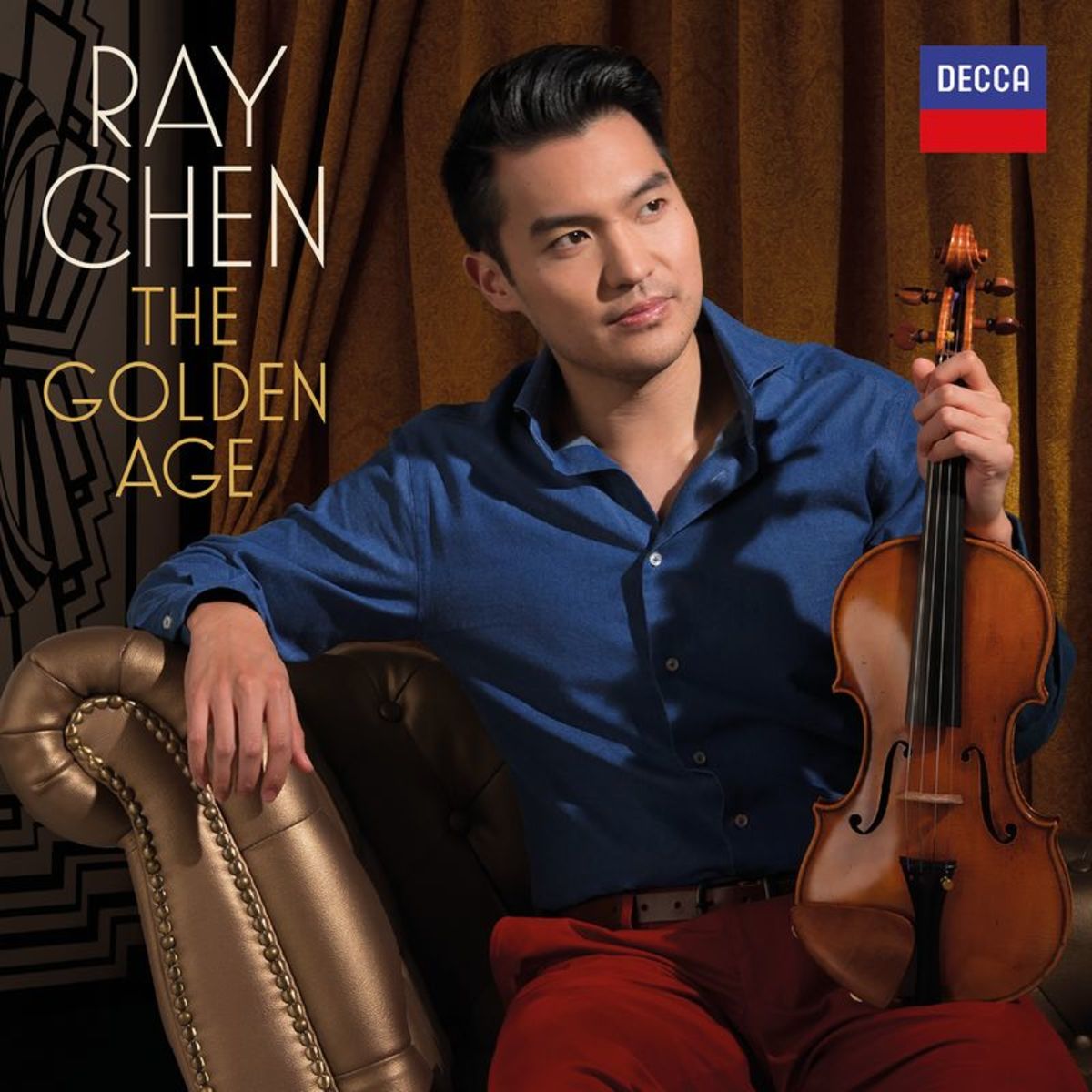
Recognized as a musician of “phenomenal talent” by The Washington Post,
Chen has handpicked a selection of works for his new album which
celebrates the ‘golden age’ of the violin – not only in terms of
repertoire, but also in performance style and ingenuity. The centrepiece
is Max Bruch’s Violin Concerto which was recorded in August last year
with the London Philharmonic Orchestra and conductor Robert Trevino.
The album opens with a piece for string quartet which has already
garnered over 50,000 hits on Chen’s YouTube channel. Titled, “A New
Satiesfaction”, it features “Gymnopédie No.1” by Erik Satie with an
allusion to Rossini’s “William Tell Overture”. Performed by Chen and his
Made in Berlin quartet, the arrangement of “A New Satiesfaction” is
done by the group’s cellist, Stephan Koncz. The other violinist in the
quartet is Noah Bendix-Balgley while Amihai Grosz plays viola. All of
Chen’s collaborators in the group are members of the Berlin Philharmonic
and they recorded together in the city last November.
The album also features compositions and arrangements by such
legendary violinists as Fritz Kreisler and Jascha Heifetz, which Chen
performs with pianist Julien Quentin. Among them are Kreisler’s
“Syncopation and Schön Rosmarin” and Cyril Scott’s “Lotus Land”, plus
Heifetz’s transcriptions of “Estrellita” by Manuel Ponce and George
Gershwin’s “Summertime”. Stephan Koncz has also arranged Debussy’s Clair de lune and the traditional Australian favourite “Waltzing Matilda” (Ray hails from Australia and Taiwan).
Chen teased The Golden Age with a custom-built computer game: http://umusic.digital/goldenviolin/.
“This album acknowledges the various styles of the past, but also
retains one important philosophy: as long as we keep inspiring and
producing, perhaps what we create now will one day be deemed worthy of
being named a golden age,” says Chen.
Chen is among the most compelling young violinists today. He has
performed with many of the world’s leading musicians in concert halls
across the globe and he has also amassed a huge online following
(including more than 2 million fans on SoundCloud) through quirky,
self-made videos and engaging social media posts.
viernes, 23 de febrero de 2018
Houston Symphony / Andrés Orozco-Estrada MUSIC OF THE AMERICAS

Having demonstrated their musical excellence with three well-received
recordings on PENTATONE of orchestral works of Antonin Dvořák, Houston
Symphony and Andrés Orozco-Estrada now present an album that comes
closer to their cultural roots than ever before. Dance rhythms, jazzy
harmonies, bright colours, city sounds; everything one associates with
The Americas can be heard on this recording. With George Gershwin’s 1928
piece An American in Paris, Silvestre Revueltas’s Sensemayá (1938),
Leonard Bernstein’s Symphonic Dances from West Side Story (1961) and
Ástor Piazzolla’s Tangazo (1970), it brings together composers from
across the twentieth century, all connected by their belonging to the
Americas. Moreover, all of these composers reconfigured the barriers
between classical and popular music, combining them to produce a sound
that illustrates their home region. In choosing these particular works,
Houston Symphony and Andrés Orozco-Estrada have aimed not to cover the
entire continent but rather to provide ‘impressions’ of America and to
‘illuminate’ as many colours in the music as possible.
Sensemayá showcases the highly original combination of native elements
from the pre-colonial indigenous past with avant-garde techniques that
characterizes the music of Mexican composer Revueltas. Leonard
Bernstein’s West Side Story, from which a suite of Symphonic Dances is
featured on this album, belongs to the most popular and famous American
music ever. Bernstein illuminates the story of two rival gangs in New
York by juxtaposing a jazz-blues ‘American’ idiom with a more ‘Latin
American’ Puerto Rican sound, in which the Cuban mambo and cha-cha, and
the Mexican huapango are also integrated. Ástor Piazzolla’s Tangazo
(grand tango) incorporates neo-classical elements such as a fugue into
the national Argentinian dance music par excellence, realizing a
reconciliation between native influences and trends in contemporary
classical music. In Gershwin’s jazzy symphonic poem An American in
Paris, city sounds temporarily give way to a sorrowful, homesickness
blues, but the piece ends in regained excitement. (PENTATONE)
miércoles, 3 de enero de 2018
Barbara Hannigan / Ludwig Orchestra CRAZY GIRL CRAZY

“On this stunning label debut on Alpha Classics, Canadian soprano
Barbara Hannigan takes multi-tasking to new levels. Not only does she
sing and conduct Berg’s technically and emotionally demanding Lulu Suite, as well as performing Luciano Berio’s dazzlingly virtuosic Sequenza III for solo voice. She has also (together with Bill Elliott) arranged a marvellous new suite from George Gershwin’s Girl Crazy,
brilliantly orchestrated by Elliott. Furthermore, she and the Ludwig
Orchestra (a flexible Dutch ensemble collective) succeed triumphantly in
presenting a coherent programme that binds these seemingly disparate
works together.”
“Berio originally composed Sequenza III (1965) for the
legendary Cathy Berberian, but Hannigan steps out boldly from under that
long-reaching shadow, transposing the work up (as allowed by Berio’s
score) to tap into a girl-like image of the imagined 15-year-old Lulu.
Hannigan negotiates the huge challenges of this avant garde score – with
its vocal clicks, breathless vowels, enigmatically fractured text, and
wide dynamic and pitch ranges – with seeming effortlessness (in fact, it
must reflect many hours of hard work). She is by turns playful,
coquettish, wistful and reflective, and the result is as absorbing and
convincing as it is challenging.
And it makes for a brilliant curtain-raiser (in the manner of an imagined prequel) to the Lulu Suite itself. Here Hannigan – who has portrayed Lulu on stage to great acclaim – is completely at one with the Ludwig players, and a clearly happy working relationship is reflected in performance of remarkable emotional openness, lyricism and sensuousness.”
And it makes for a brilliant curtain-raiser (in the manner of an imagined prequel) to the Lulu Suite itself. Here Hannigan – who has portrayed Lulu on stage to great acclaim – is completely at one with the Ludwig players, and a clearly happy working relationship is reflected in performance of remarkable emotional openness, lyricism and sensuousness.”
“These are sophisticated, witty arrangements, rounded off with an
exuberant, jazzy, big-band version of ‘I got rhythm’: it’s the cherry on
the cake of a tremendously entertaining disc which explores real
emotional depths as well as delighting the ear.
Add to all this a classy recording from the Alpha team, attractive presentation and a bonus 20-minute behind-the-scenes DVD, and this wonderfully crazy disc deserves every success.” (Disc of the Week
Europadisc, September 2017)
Add to all this a classy recording from the Alpha team, attractive presentation and a bonus 20-minute behind-the-scenes DVD, and this wonderfully crazy disc deserves every success.” (Disc of the Week
Europadisc, September 2017)
lunes, 17 de julio de 2017
Xiayin Wang / Royal Scottish National Orchestra / Peter Oundjian AMERICAN PIANO CONCERTOS

The young Chinese-born pianist Xiayin Wang, now
resident in the USA, has been enthralling audiences worldwide and
gaining ever greater international acclaim with her winning combination
of consummate technical brilliance, fine musicianship, and personal
verve. Equally renowned as a recitalist and chamber musician, she is
here the soloist in three great piano concertos by the American
composers George Gershwin, Aaron Copland, and Samuel Barber, performed
with the Royal Scottish National Orchestra under Peter Oundjian.
The Concerto in F by Gershwin, composed in 1925,
represents one of his finest syntheses of the classical and jazz
traditions. His extraordinary skill as a tunesmith is heard in full
force within the concerto’s three movements, the work expressing his
‘unabashed delight in the stridency, the gaucheries, the joy and
excitement of life as it is lived right here and now’. Xiayin Wang has
already shown her natural affinity with Gershwin’s music in her previous
Chandos release, playing Earl Wild’s Gershwin transcriptions with
‘verve, brilliance and sheer delight’, as American Record Guide put it.
Copland’s Piano Concerto from 1927 is another work
influenced by jazz. At the time of its premiere, comparisons were
inevitably drawn between this and Gershwin’s Concerto but Copland
dismissed the influence of Gershwin. Rather, his style reflects the jazz
elements used by composers living in Paris in the 1920s, such as
Milhaud and Stravinsky. The work’s two distinct sections reflect what
Copland believed to be the two basic moods of jazz, ‘the slow blues and
the snappy number’.
Barber’s Pulitzer Prize winning Concerto for Piano dates from 1962. Like the other two works on the disc it shows the
diversity of influence in American music in the twentieth century.
Moments of harmonic ambiguity and muscular dissonance reflect Barber’s
interest in Russian music, a subtle jazz influence enriching the musical
language, especially in the rhythms of the compact finale. The music
manifests a dramatic and rhetorical style, however, that is deeply
rooted in a romanticism which pervades all of Barber’s output.
Suscribirse a:
Entradas (Atom)


