
Mostrando entradas con la etiqueta Royal Liverpool Philharmonic Orchestra. Mostrar todas las entradas
Mostrando entradas con la etiqueta Royal Liverpool Philharmonic Orchestra. Mostrar todas las entradas
sábado, 7 de noviembre de 2020

viernes, 5 de junio de 2020

jueves, 7 de mayo de 2020

viernes, 1 de mayo de 2020

jueves, 28 de noviembre de 2019
Samantha Ward / Murray McLachlan / Royal Liverpool Philharmonic Orchestra / Charles Peebles DORA BRIGHT AND RUTH GIPPS Piano Concertos

Another disc of real artistic merit and technical and musical quality
from Somm. For the curious, the "jump out" name here is that of Dora
Bright. Two substantial concertante scores are presented of music by a
composer whom even the most assiduous collector of British music is
unlikely to know.
Certainly, I had never even heard the name. Robert Matthew-Walker's liner note is as detailed as it is enthusiastic and all the detail given here is drawn from his essay. As a pianist Bright was clearly a very talented player – performing at the Covent Garden Promenade concerts by the time she was 20 and even playing for Liszt four years later. The CD liner details various impressive "firsts" that Bright achieved through to the end of the 19th century. She married an army officer 33 years her senior, which gave her financial security but seems to have caused a falling off in her creativity as both performer and composer. She lived until 1951 but apparently many/most of her scores are lost with the two works presented here among the few surviving examples of her music. (Nick Barnard)
Certainly, I had never even heard the name. Robert Matthew-Walker's liner note is as detailed as it is enthusiastic and all the detail given here is drawn from his essay. As a pianist Bright was clearly a very talented player – performing at the Covent Garden Promenade concerts by the time she was 20 and even playing for Liszt four years later. The CD liner details various impressive "firsts" that Bright achieved through to the end of the 19th century. She married an army officer 33 years her senior, which gave her financial security but seems to have caused a falling off in her creativity as both performer and composer. She lived until 1951 but apparently many/most of her scores are lost with the two works presented here among the few surviving examples of her music. (Nick Barnard)
Vasily Petrenko / Royal Liverpool Philharmonic Orchestra MUSSORGSKY Pictures at an Exhibition

Vasily Petrenko is the Principal Conductor of the Royal Liverpool Philharmonic Orchestra.
Between 1994 and 1997, Petrenko was Resident Conductor at the St
Petersburg State Opera and Ballet Theatre in the Mussorgsky Memorial
Theatre. During this time he gained an enormous amount of operatic
experience and he now has over 30 operas in his repertoire.
Petrenko is equally at home in symphonic and operatic repertoire. On
the symphonic front, he has previously worked with the City of
Birmingham Symphony, Swedish Radio, Ensemble Orchestral de Paris and NDR
Hanover, BBC Wales, Cadaques and Castille y Leon Orchestras in Spain.
A Russian orchestral showcase from Vasily Petrenko and the award
willing Royal Liverpool Philharmonic Orchestra present a programme of
Russian orchestral classics - with some surprises.
Ravel’s brilliant orchestration of Mussorgsky’s Pictures at an Exhibition and Khachaturian’s sumptuously romantic suite from his ballet
‘Spartacus’ with its famous ‘Adagio’ keep company with Kabalevsky’s fizzing overture to his opera ‘Colas Breugnon’ and
Schehedrin’s ‘Naughty Limericks plus a wistful Rachmaninov song in
beautiful orchestral arrangement.
lunes, 28 de octubre de 2019
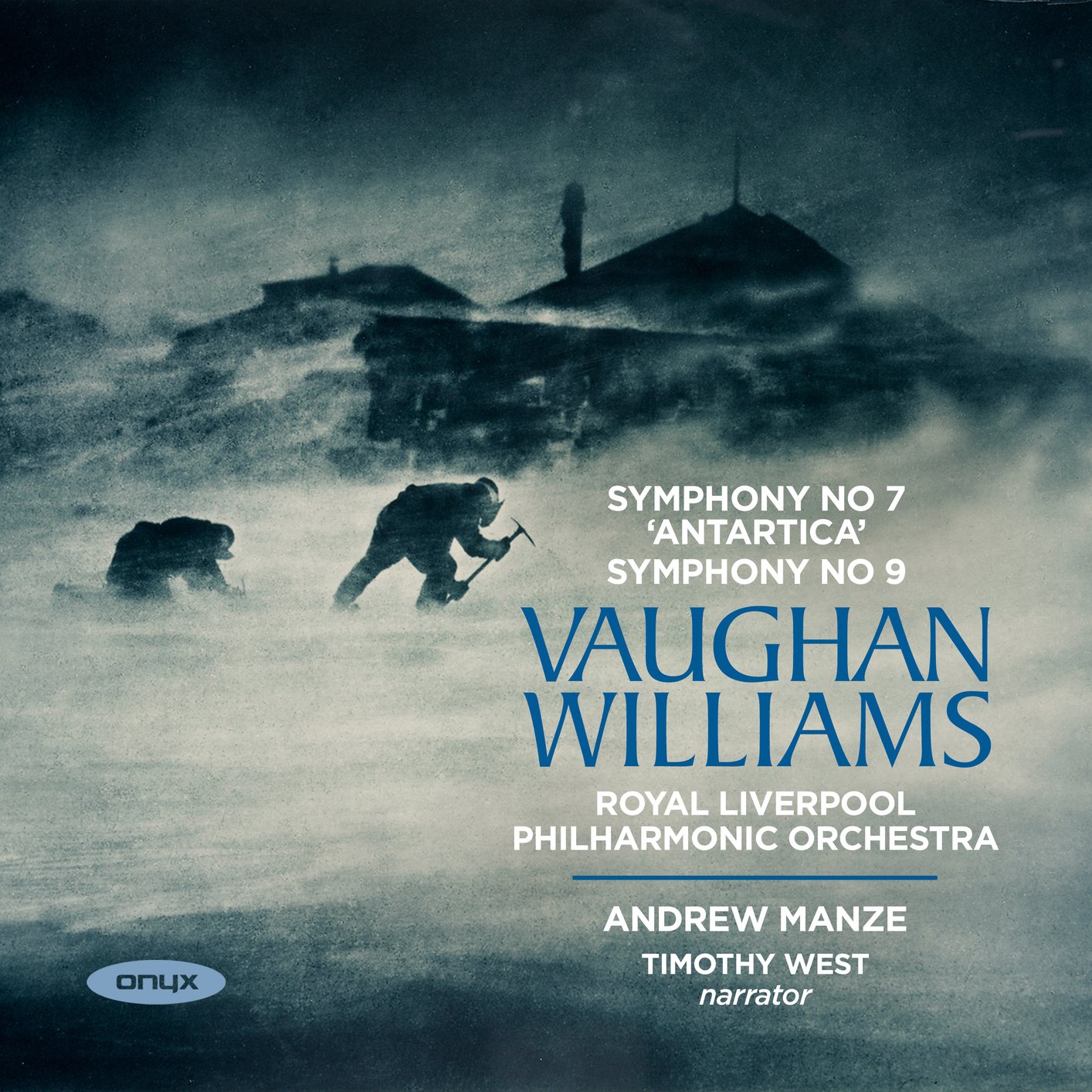
Royal Liverpool Philharmonic Orchestra / Andrew Manze VAUGHAN WILLIAMS The Lark Ascending - Fantasia on a Theme by Thomas Tallis

Andrew Manze is widely celebrated as one of the most stimulating and inspirational conductors of his generation. His extensive and scholarly knowledge of the repertoire, together with his rare skill as a communicator and his boundless energy, mark him out. Manze’s position as Chief Conductor of the NDR Radiophilharmonie Hannover has been extended until 2023.
James Ehnes has established himself as one of the most sought-after violinists on the international stage. Gifted with a rare combination of stunning virtuosity, serene lyricism and an unfaltering musicality, Ehnes is a favourite guest of many of the world’s most respected conductors including Vladimir Ashkenazy, Marin Alsop, Andrew Davis, Stéphane Denève, Mark Elder, Iván Fischer, Edward Gardner, Paavo Järvi, Juanjo Mena, Gianandrea Noseda, David Robertson and Donald Runnicles
martes, 9 de julio de 2019
Isata Kanneh-Mason ROMANCE

For the 200th anniversary of Clara Schumann’s birth, Isata Kanneh-Mason takes us on a journey through the composer’s extraordinary life with her stunning debut album, Romance, on
Decca Classics. Isata will be joining forces with an all-female line-up
to champion the significance of women musicians throughout the years,
and their influence on the classical musical canon. The recording
features Clara Schumann’s Piano Concerto in A minor, written at the age
of fourteen, performed by the composer at Leipzig Gewandhaus two years
later under the baton of Felix Mendelssohn.
On signing to the label, Isata said: “Creating my debut record
has been such an exciting journey for me, and I have learned so much
along the way! It has been fantastic to work with the team at Decca
Classics and to share the music of Clara Schumann in such a significant
year – the 200th anniversary of her birth.”
Dr. Alexander Buhr, Managing Director of Decca Classics, said: “Isata
is an immensely talented pianist with remarkable musicality and a
curious mind, always ready to explore new musical horizons. We are very
happy to welcome her to the Decca Classics family with this project
celebrating one of the greatest women in music history.”
lunes, 15 de abril de 2019
Ning Feng / Royal Liverpool Philharmonic Orchestra / Carlos Miguel Prieto ELGAR & FINZI Violin Concertos

The violin was Edward Elgar’s own instrument and his Violin Concerto is
almost like a personal confession: it was ‘too emotional’, Elgar admitted,
adding that he loved it nonetheless. The solo part is one of the most
exhausting in the repertoire – a veritable compendium of bravura violin
techniques. In an interview, Fritz Kreisler, to whom the Violin Concerto is
dedicated, ranked Elgar with Beethoven and Brahms. Elgar met the
challenge: his Violin Concerto combines the singing quality of Beethoven with the symphonic drama of Brahms.
The London-born Gerald Finzi was in many ways more English than Elgar
and his teacher Ralph Vaughan Williams. As can be heard in his Violin
Concerto, a well kept secret from 1927, that had its first performance after
the premiere only in 1999. The work lasts twenty minutes: a six-minute
allegro, a superb central ten-minute molto sereno, and ending with a four-minute
hornpipe rondo. It is difficult to understand why Finzi was
dissatisfied with his two fast movements. The first combines beauty with
energy. Through its sheer romantic beauty, the molto sereno is one of
t hose pieces where the hairs stand up on the back of the neck. (from liner notes by Clemens Romijn)
sábado, 26 de enero de 2019
Marina Rebeka MOZART Arias
 'A Latvian soprano who has dazzled audiences in New York and Vienna
with her impassioned performance of Donna Anna,’ proclaims the jewel
case. Reviews I’ve checked out were more mixed. Still, Marina Rebeka
makes a fine showing in Anna’s ‘Non mi dir’, with strong, bright, evenly
produced tone, a shapely sense of line and precise coloratura. A touch
more warmth (we surely have to believe that Anna’s avowal of love to
Ottavio is genuine) and closer engagement with the text would have made
her performance even better.
'A Latvian soprano who has dazzled audiences in New York and Vienna
with her impassioned performance of Donna Anna,’ proclaims the jewel
case. Reviews I’ve checked out were more mixed. Still, Marina Rebeka
makes a fine showing in Anna’s ‘Non mi dir’, with strong, bright, evenly
produced tone, a shapely sense of line and precise coloratura. A touch
more warmth (we surely have to believe that Anna’s avowal of love to
Ottavio is genuine) and closer engagement with the text would have made
her performance even better.
With the hint of spinto steel in her voice, it’s a shame
that Rebeka doesn’t include Anna’s ‘Or sai chi l’onore’ here, opting
instead for Elvira’s ‘Mi tradì’, sung firmly enough, if rather
carefully, without any special illumination. In the two Queen of the
Night arias she unleashes spitfire coloratura to bring the house down.
Konstanze’s gargantuan showstopper ‘Martern aller Arten’ would send any
Pasha packing. This is another performance of fierce determination that
lacks a tempering tenderness and pathos. Here and elsewhere the
orchestral contribution is perfectly competent but rather wanting in
temperament.
The hard glare that can afflict Rebeka’s top notes, useful in
expressions of vengeance and defiance, is less desirable in Pamina’s
aria, taken at a very deliberate, old-fashioned tempo. This is surely
not her part. Despite an occasional tendency to sing on the flat side of
the note, the Countess’s arias suit Rebeka much better. She finds the
right inwardness for ‘Porgi amor’ and builds to a ringing, affirmative
climax in ‘Dove sono’. Best of all is her Elettra in Idomeneo,
sung with an ideal baleful, impassioned grandeur. If Rebeka doesn’t
quite succeed in delivering all of ‘this gorgeous music to the
listener’s heart’, as she puts it in the booklet, her debut recital
announces a soprano of impressive vocal accomplishment and, at her best,
dramatic flair. (Richard Wigmore / Gramophone)
lunes, 14 de enero de 2019
Sebastian Bohren / Royal Liverpool Philharmonic Orchestra / Andrew Litton MENDELSSOHN - BRITTEN Violin Concertos
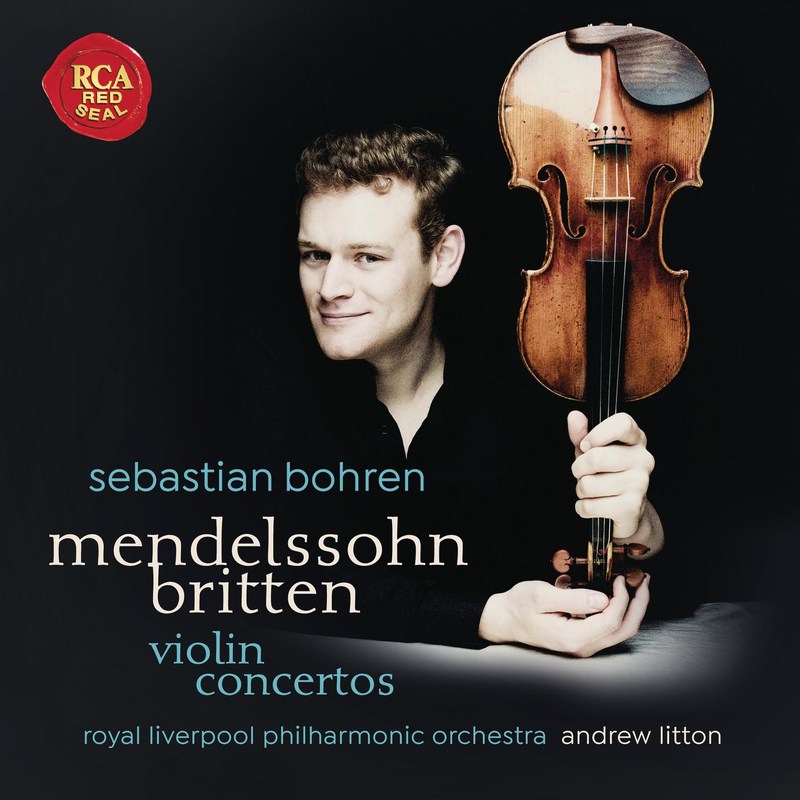
Sebastian Bohren constantly continues on his way – and does it well. He
carefully chooses his broad, varied repertoire and masterfully brings it
to sound. Whether solo, in a chamber ensemble or with a large
orchestra, whether musical rarities or established milestones: his
playing arouses the enthusiasm of audiences and critics alike!
On the new album, Sebastian Bohren now devotes himself to violin
concertos by two great composers: one of them is a repertoire piece par
excellence, whereas the other, despite the undoubted genius of its
creator, is rarely heard. Together with the Royal Liverpool Philharmonic
Orchestra conducted by Andrew Litton, Sebastian Bohren has recorded
violin concertos by Felix Mendelssohn and Benjamin Britten;
Tchaikovsky’s graceful Sérénade mélancolique completes the program.
jueves, 6 de diciembre de 2018
European Opera Centre / Royal Liverpool Philharmonic Orchestra / Laurent Pillot MOZART Così fan tutte

A Cosi with a difference: studies of the composer’s manuscript by Ian
Woodfield reveal that Mozart was undecided whether to ‘cross’ the
lovers or keep them uncrossed. Key passages are altered often to
startling effect – Ferrando opens the opera singing ‘La mia Fiordiligi’
and not the usual ‘la mia Dorabella’. Phrases such as ‘Rivolgete a lui
lo sguardo’ (Turn your gaze upon him) appear in Mozart’s own catalogue
as ‘Rivolgete a me’ (Turn you gaze to me) , and although ‘lui’ is in
another hand, Mozart had left blank spaces to be filled in later – an
indication of his indecision about the pairings. This brilliant aria,
cut from the final version is restored in this performance. With the
reinstatement of the brilliant ‘Rivolgete’, Guglielmo is in a position
to cede his large Act II aria ‘Donne mie’ to Don Alfonso who, unusually
for a major character in an opera buffa, has no true aria, his tiny
arioso in Act I (‘Vorrei dir’) being little more than a comic
caricature. With no opportunity to reveal himself in an extended musical
statement, he remains an aloof figure, a philosopher, a puppet master
controlling the experiment. Although ‘Donne mie’ presents a misogynist
‘overview’ of the behaviour of women, its performer at least claims to
like them. In that sense, ‘my ladies’ receive a slightly ironical and
patronising defence in the manner adopted by this character in his
summation of the outcome of the experiment in ‘Tutti accusan le donne’.
As sung by Guglielmo, however, ‘Donne mie’ can only be taken as a
generic aside, since it expresses a view of women diametrically opposed
to the one he is advocating so robustly in the main drama.
In the climactic duet between Ferrando and Fiordiligi, indecision is
again to be seen precisely in the use of pronouns. It makes a big
difference to Ferrando whether he is attempting to seduce his own lover
or Guglielmo’s. As he sees Fiordiligi about to waver, he is suddenly
unsure as to how he should react; Fiordiligi recognises that her
constancy is under threat, but in the balancing phrase, Mozart could not
decide whether Ferrando should refer to her constancy (‘la sua
costanza’) my constancy (‘la mia costanza’) or even your constancy (‘la
tua costanza’). There are multiple crossings out. At the end of ‘Come
scoglio’ when everyone on-stage is reeling from the ferocity of
Fiordiligi’s dismissal of the men, one of them has to take the lead in
attempting to detain her. As the two men are still working as a pair, it
was perhaps thought not to matter much, but if it did, then clearly the
man setting himself up as Fiordiligi’s future partner should be the one
to address her. Mozart had a double change of mind at the start of the
ensuing recitative ‘Ah non partite!’ (Ah, do not leave!), setting these
words first for Ferrando, then for Guglielmo and then for Ferrando
again. Obviously the choice did have some significance.
martes, 4 de diciembre de 2018
Vasily Petrenko / Royal Liverpool Philharmonic Orchestra STRAVINSKY The Firebird RIMSKY-KORSAKOV Le Coq d'Or

After the critically acclaimed Rite of Spring (ONYX4182) the award -
winning team of Vasily Petrenko and the RLPO continue their survey of
the Stravinsky ballets with The Firebird. As with the earlier album, the
coupling is a fascinating one. Stravinsky was Rimsky’s star pupil, and
his influence on Stravinsky can be detected clearly in the opulent and
exciting score of The Firebird. Rimsky’s Golden Cockerel suite was
arranged from music from his 1909 opera based on the story by Pushkin.
Vasily Petrenko / Royal Liverpool Philharmonic Orchestra STRAVINSKY The Rite of Spring RACHMANINOV Spring DEBUSSY Printemps

viernes, 31 de agosto de 2018
REBECCA DALE Requiem For My Mother

At the heart of Rebecca’s first recording is her Materna Requiem – a
beautifully moving and uplifting tribute to her late mother, who died in
2010. The work draws from both the traditional text of the Catholic
Mass and contemporary poetry and is a homage to parents everywhere. It
features the voices of soprano Louise Alder, tenor Trystan Griffiths and
young chor
isters Hannah Dienes-Williams and Edward Hyde (BBC Radio 2
Young Chorister of the Year 2016) alongside the Royal Liverpool
Philharmonic Orchestra. The work will receive its world premiere
performance at The North Wales International Music Festival in St Asaph
Cathedral on 22nd September.
Rebecca Dale says of the album: “It’s an amazing feeling to be
releasing my first album and sharing my music with everyone. The Requiem
is a very personal piece to me, and it uses melodies I wrote when I was
a child so you could say I’ve been working on it for most of my life!
When I first wrote the Requiem I didn’t even realise it would receive a
performance so it’s a hugely exciting moment to hear it on record, and I
hope the piece connects with people.”
The first track from Rebecca’s new album, ‘Pie Jesu’, is out now and
expresses a parent’s love for their son or daughter – so instead of
using a child’s voice as is tradition for this movement, it’s
represented as a father singing to his newborn.
The process of writing the Materna Requiem has been somewhat
cathartic for Rebecca – she describes the musical tribute to her mother
as “a way for me to build a bridge back to her”. Rebecca is keen to help
others who have suffered the loss of a parent and is a supporter of
Winston’s Wish – the UK’s first childhood bereavement charity. Donation
buckets will be available at the premiere performance of the work, plus
Rebecca will be taking part in ‘TrekFest’ for the charity.
Rebecca’s work first came to public attention when BBC Radio 3
premiered her choral symphony ‘When Music Sounds’ in 2014 and the track,
‘I’ll Sing’, went to No.1 on the Classical iTunes chart. It seems
fitting that the whole piece is recorded on her debut album. Performed
by the Cantus Ensemble – one of London’s leading chamber choirs – this
inspiring orchestral work is a glorious counterpart to the Requiem and
concludes the album in stunning style.
lunes, 5 de febrero de 2018
Mari Samuelsen / Håkon Samuelsen JAMES HORNER Pas de Deux
 Pas de Deux is not a James Horner
score for an unknown film but a freestanding composition, being billed
as his first foray into classical music since the 1980s. Leaving aside
the question of whether film scores qualify as classical music, it seems
pretty clear that those who like Horner
in general will like this work. Here and elsewhere, he does one thing
well -- lush romanticism -- and does it very, very well. His economy of
gesture, which makes one wonder why neutral arpeggios are having such an
emotional impact, is fully in evidence here, and the configuration of
forces, with lots to do for the two soloists, produces film score-like
textures. The Norwegian violin-and-cello duo of Mari and Håkon Samuelson commissioned Pas de Deux, and though it is being promoted as the first major double concerto for violin and cello since Brahms, Horner
himself has described the piece as a composition for violin and cello
with orchestral accompaniment rather than as a true concerto. For all
that, Pas de Deux does not really resemble Horner's film scores musically. It has elements that suggests what might have happened had Vaughan Williams somehow lived long enough to become enamored of minimalism, and it shows that Horner has been keenly aware of contemporary crossover directions. The work is performed here by the Samuelsens and the Royal Liverpool Philharmonic under Vasily Petrenko,
the forces that premiered the work in 2014, and it's safe to say that
their work reflects the composer's intentions. The album is filled out
with works by Arvo Pärt (the protean Fratres), Giovanni Sollima, and Ludovico Einaudi, whose Divenire also features the violin-cello combination. Horner
can hold his own with any of them, and listeners who imagine
sun-drenched meadows while listening to Pas de Deux will have a very
good time with it. (James Manheim)
Pas de Deux is not a James Horner
score for an unknown film but a freestanding composition, being billed
as his first foray into classical music since the 1980s. Leaving aside
the question of whether film scores qualify as classical music, it seems
pretty clear that those who like Horner
in general will like this work. Here and elsewhere, he does one thing
well -- lush romanticism -- and does it very, very well. His economy of
gesture, which makes one wonder why neutral arpeggios are having such an
emotional impact, is fully in evidence here, and the configuration of
forces, with lots to do for the two soloists, produces film score-like
textures. The Norwegian violin-and-cello duo of Mari and Håkon Samuelson commissioned Pas de Deux, and though it is being promoted as the first major double concerto for violin and cello since Brahms, Horner
himself has described the piece as a composition for violin and cello
with orchestral accompaniment rather than as a true concerto. For all
that, Pas de Deux does not really resemble Horner's film scores musically. It has elements that suggests what might have happened had Vaughan Williams somehow lived long enough to become enamored of minimalism, and it shows that Horner has been keenly aware of contemporary crossover directions. The work is performed here by the Samuelsens and the Royal Liverpool Philharmonic under Vasily Petrenko,
the forces that premiered the work in 2014, and it's safe to say that
their work reflects the composer's intentions. The album is filled out
with works by Arvo Pärt (the protean Fratres), Giovanni Sollima, and Ludovico Einaudi, whose Divenire also features the violin-cello combination. Horner
can hold his own with any of them, and listeners who imagine
sun-drenched meadows while listening to Pas de Deux will have a very
good time with it. (James Manheim)domingo, 23 de octubre de 2016
Tharaud plays RACHMANINOV
 French pianist Alexandre Tharaud takes on the blockbuster 'Rach 2' concerto in a thrilling performance with the Royal Liverpool Philharmonic Orchestra and Russian maestro Alexander Vedernikov. It is coupled with more intimate Rachmaninov for piano six-hands (for which Alexandre is flanked by Alexander Melnikov and Aleksandar Madžar) and the icing on the cake: a sublime Vocalise in the original version for voice and piano, with pure-voiced French soprano Sabine Devieilhe.
Alexandre Tharaud's recorded catalogue is large and eclectic, but this is the first time he has devoted an entire album to Russian repertoire – specifically to the music of Sergei Rachmaninov. 'I was still quite young when I first played this concerto' explains Tharaud. 'I adored it... Rachmaninov's virtuosity really appeals to young pianists. Today, of course I'm still enthralled by the concerto's virtuosity, but now I'm more interested in its dark shadows: the sense of despair, of staring into the abyss. My interpretation of Rachmaninov has changed a lot over the years.' (Warner Classics)
lunes, 11 de julio de 2016
Royal Liverpool Philharmonic Orchestra / Andrew Manze VAUGHAN WILLIAMS A London Symphony - Symphony No. 8

Andrew Manze
is familiar to classical listeners as a violinist and as a specialist
in early music, but he has also pursued conducting, performing
orchestral music of a more modern vintage. His concert performances have
increasingly featured the symphonies of Ralph Vaughan Williams,
and this 2016 release on Onyx of the Symphony No. 2 in G major, "A
London Symphony" and the Symphony No. 8 in D minor gives a clear idea of
his approach to this music. The impassioned reading of "A London
Symphony" with the Royal Liverpool Philharmonic Orchestra reveals that Manze
has an affinity for expansive melodic lines, poignant harmonies, and
rich, atmospheric orchestration, and the sounds the orchestra produces
are quite lush and luxuriant, wholly appropriate for Vaughan Williams' post-Romantic phase. The Symphony No. 8, dating from 1955, is Vaughan Williams' shortest symphony, and his use of pitched percussion creates a wonderful atmosphere that is unique in the cycle. Manze
draws out marvelous sonorities from the orchestra, and the musicians
respond with great warmth and a level of enthusiasm that is easy to
perceive. Onyx has produced an exceptional recording with vivid tone
colors and a resonant acoustic that gives the music a spacious feeling. (Blair Sanderson)
jueves, 8 de enero de 2015
Pumeza VOICE OF HOPE

Matshikiza's career would have been unthinkable two decades ago. Today, she is part of a new generation of black South African opera singers. Small and self-contained, she cuts a glamorous figure, not least on the cover of Voice of Hope, her debut recording for Decca. With its mix of Mozart and Puccini arias, smartly orchestrated Xhosa, Swahili and Zulu songs, and the anthem she performed to an audience of a billion in the Commonwealth Games opening ceremony last week, the album is aimed squarely at a crossover audience.
Matshikiza is pragmatic about the mix, pointing out that if she can bring "something a little bit different" to the market, why not? But she is frank about the technical challenges of finding a way of singing that is "not quite operatic", and pulls a face recalling the difficulty of working on the album while also preparing for the role of Nanetta in Verdi's Falstaff for Stuttgart Opera.
The pure, wistful voice that Matshikiza used to sing Freedom Come All Ye in Glasgow is about a quarter the size of her Puccini voice. On the album, her sound in the arias is opulent, glowing. She is reticent about her long-term ambitions, but it's difficult to imagine her following in the crossover footsteps of, say, Katherine Jenkins or Russell Watson. As to Thula Baba, Pata, Pata and the other African songs on the disc, there's both a nod to the chic fusion of jazz and calypso that was Miriam Makeba's signature style in the early 60s – and a sting behind the smile. In Iya Gaduza, an unemployed man paces alone in his house while his wife works for a white family. Even Freedom Come All Ye, written the year of the Sharpeville massacre in 1960, contains a reference to Nyanga, one of the townships where Matshikiza grew up.
At the centre of the album is South African composer Kevin Volans's Umzi Watsha. Volans met the soprano when she sang in an opera he wrote for Cape Town's Handspring Puppet Theatre (the company behind War Horse's puppets). He urged Matshikiza to audition for the British conservatoires, paying her air fare. Her first stop in London was the Royal College of Music, where she was immediately offered a full scholarship. The Royal Opera House's young artists scheme followed, with roles in The Minotaur, Don Carlo and Hänsel und Gretel. The decision to take things slowly was hers: "I don't understand what the hurry is. I want to sing as best as possible. It doesn't matter when or to whom." At Covent Garden, observation was as vital a part of the learning experience as performance and coaching. Its music director Antonio Pappano remains her model of the ideal, collaborative singers' conductor: "Talking to the soloists, he would say, 'What do you want to do here? I'll follow you', and only then would he suggest what he thinks. When you are a singer that gives you so much security, so much energy." (theguardian.com)
Suscribirse a:
Entradas (Atom)

-
Music Is The Key will be closing soon. Over the last year maintaining this site and keeping it up to date has become an expensive and tim...

