
Mostrando entradas con la etiqueta Les Talens Lyriques. Mostrar todas las entradas
Mostrando entradas con la etiqueta Les Talens Lyriques. Mostrar todas las entradas
lunes, 14 de septiembre de 2020

martes, 10 de marzo de 2020

miércoles, 3 de julio de 2019
Les Talens Lyriques, Christophe Rousset ANTONIO SALIERI Tarare

After Les Danaïdes and Les Horaces, Les Talens Lyriques concludes the
group’s cycle of Antonio Salieri’s French operas with the world
premiere recording of Tarare. Often unfairly overshadowed by his
brilliant contemporary Mozart, Salieri here composed a genuine
masterpiece on the only libretto ever written by Beaumarchais.
Salieri has a taste for exoticism and, like Mozart in Die Entführung
aus dem Serail, he transports us into a fantasy Orient seen through the
eyes of the pre-revolutionary philosophy of the Enlightenment.
The indefatigable Christophe Rousset, unswerving in his efforts to
revive scores that are rarely performed or have mysteriously languished
in the shadows, directs a five- star cast: the Captain of the Guard
Tarare (Cyrille Dubois) enters the palace of the Sultan Atar
(Jean-Sébastien Bou) in order to rescue his beloved, the slave Astasie
(Karine Deshayes). Behind the love triangle, one senses Beaumarchais’s
indictment of authority in his depiction (in 1787!) of the people’s revolt
against the Sultan’s tyrannical power - so much so that it is
astonishing that the plot escaped the royal censor’s net.
The music follows the story’s misunderstandings, plot twists and
spectacular scenes to produce an opera that prefigures Romanticism,
exhilaratingly performed by Les Talens Lyriques and Les Chantres of the
Centre de Musique Baroque de Versailles. A release that should restore
Salieri’s prestige once and for all.
jueves, 14 de febrero de 2019
Les Talens Lyriques / Christophe Rousset FRANÇOIS COUPERIN Les Nations
 The 350th anniversary of François Couperin's birth evoked less activity than other anniversaries in the year 2018, when this album appeared, but if you missed it you might find this a worthwhile acquisition as a state-of-the-art Couperin performance. Harpsichordist/director Christophe Rousset and his ensemble Les Talens Lyriques are lyrical indeed in the set of trio sonatas called Les Nations, "the nations." The set purports to evoke four nations: France, Spain, L'Imperiale (the Holy Roman Empire), and La piémontaise (the Piedmont kingdom, in Italy). Whatever features might have suggested these national styles are hard to hear now, and really Les Nations is above all one of the works in which Couperin cultivated what he called elsewhere les goûts réunis, the "reunited" tastes of Italy and France. In the four Nations, his solution was unique: each of the four parts consists of a little Corellian Italian sonade, or sonata, with its own four sections compacted into a single movement, followed by suite of French dances. You might wonder why trio sonatas would require the larger ensemble of Les Talens Lyriques, but this works: the set probably would not have been performed at a stretch in Couperin's time, and Rousset changes things up with varying forces. Best of all, the playing of Rousset's group is honed to a delightful languor, a smoothness and grace that have rarely been equaled in the historical-performance sphere. The sarabandes get flutes instead of violins, and you could sample the one from the Impériale suite for a taste. Browse the paintings of Lancret or Watteau while you do, and you may experience peak French. Just lovely. (James Manheim)
 jueves, 17 de enero de 2019
Les Talens Lyriques / Christophe Rousset FRANÇOIS COUPERIN Ariane consolée par Bacchus - Apothéoses de Lully & de Corelli

Here, for the first time, we can hear what appears to be a lost
cantata by François Couperin. Numerous of his secular airs, chansons and
canons survive in manuscript and print, but until now none of the
cantatas known to have existed at the time of his death (1733) have been
found. Rousset’s cogent argument for attributing this anonymous
manuscript work, hitherto known only from a 1716 Amsterdam catalogue
entry as ‘Ariane abandonée’, is, I believe, compelling.
This Ariane consolée par Bacchus, somewhat unusually, is
for a baritone. Although best known as an opera singer and recitalist
of later repertoire, Stéphane Degout adjusts his voice to the varied
pace within the recitatives and expresses words such as ‘douceur’ in the
first Air and the tongue-twisting text of the ritournelle in the final
Air with the lightest touch. Moreover, the acoustic of the Eglise
Saint-Pierre (Paris) allows us to enjoy both the warmth of his voice and
the detail of his fluent ornamentation. The presence of Christophe Coin
playing the concertante bass viol part in these tracks adds further to the pleasure to be had from listening to this modern premiere.
The remaining works on the disc were recorded in the exceptional
acoustic of the former 14th-century monastery Les Dominicains de
Haute-Alsace. Couperin’s entertaining pair of apotheoses accorded to
Lully and Corelli is almost unique in the repertoire because of his
‘acerbic’ programmatic commentaries, elegantly delivered here by Rousset
from the keyboard. These works have been recorded many times but rarely
so well. Rousset’s vision for his ensemble of oboes, flutes, violins
and viol is sublime, as too are his harpsichord realisations. This is a
landmark recording to treasure. (Julie Anne Sadie / Gramophone)
lunes, 3 de septiembre de 2018
Les Talens Lyriques / Christophe Rousset ANTONIO SALIERI Les Horaces

Les Talens Lyriques
are a major french classical music ensemble, recognized on the
international scale for both its musicological work and editorial
choices. Created twenty years ago by french harpsichordist and conductor
Christophe Rousset. The ensemble has a large lyrical and instrumental repertoire ranging from Baroque to Early Romanticism.
Following the release of Les Danaïdes in 2015, Les Talens Lyriques present the first world recording of Antonio Salieri’s Les Horaces,
which they recreated at Versailles in 2016. To bring this score back to
life, Christophe Rousset gathered a vocal cast in which tenor Cyrille
Dubois, Judith van Wanroij, Julien Dran or Jean-Sebastien Bou embody the
fate of the characters inspired by the fratricidal struggle of Horatius
and Curiatius in Ancient Rome, dramatically revived by an already
romantic Salieri in his musical boldness. Fights, vows and great crowd
scenes, the tears of heroine Camilla, the Curiatius’ dilemma, or the
implacable determination of old Horatius offer intense and original
drama.
miércoles, 6 de diciembre de 2017
Les Talens Lyriques / Christophe Rousset JEAN-PHILIPPE RAMEAU Pygmalion

miércoles, 19 de julio de 2017
Les Talens Lyriques / Christophe Rousset ANTONIO SACCHINI Renaud

Renaud (1783) marked Sacchini's debut in Paris. Despite much criticism from the supporters of his rivals Gluck and Piccinni, Renaud was a success and Sacchini became the new favourite of Marie- Antoinette. Encouraged by the public who saw him as one of the finest composers of that time, he enriched the repertoire of the Paris Opéra with several masterpieces. Some of them were staged regularly for many years. Renaud was presented almost without interruption until 1799, and was revived in 1815. This recording has been made at the Arsenal of Metz in October 2012.
Rosemary Joshua / Les Talens Lyriques / Christophe Rousset HENRY PURCELL Harmonia Sacra
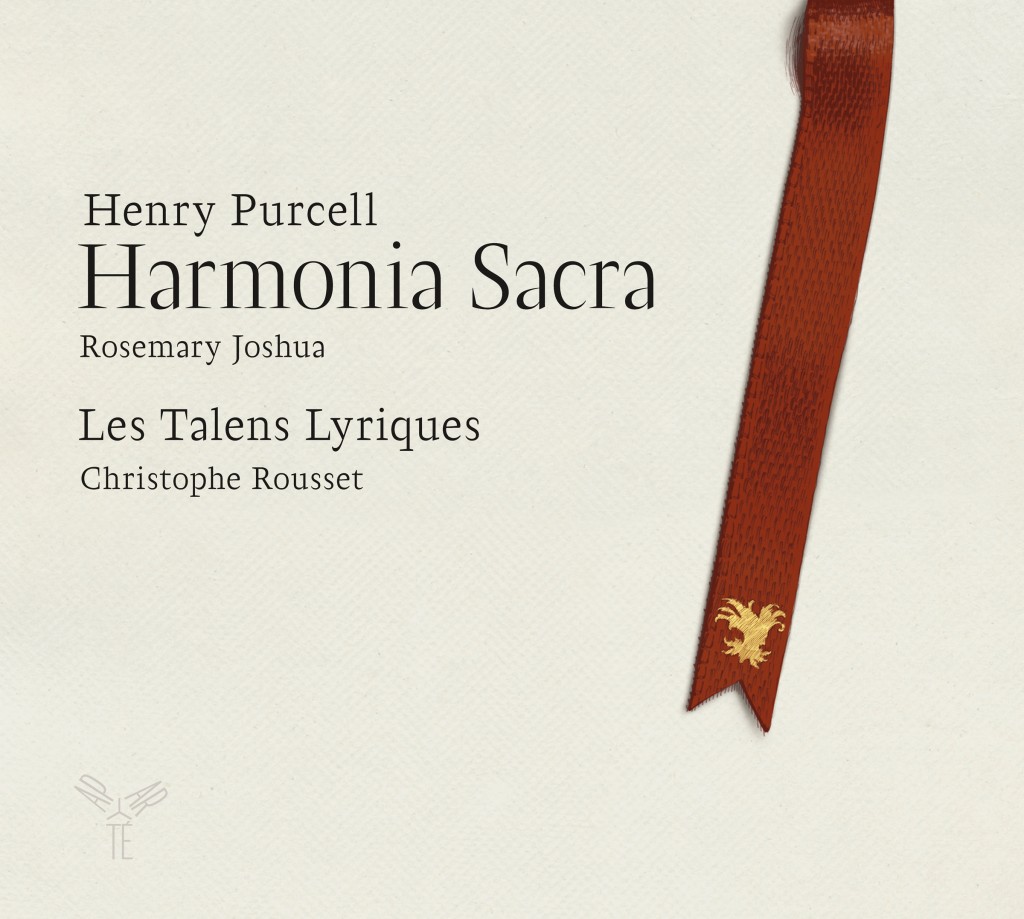
As Purcell song programmes go, this one is not easy listening. Perhaps only the Evening Hymn
would count as a ‘favourite’. And, whereas most anthologies, mixing the
sacred with the secular, could leaven the penitential tone of ‘With
sick and famish’d eyes’ or the traumatic drama of ‘Tell me some pitying
angel’ with lighter-hearted fare, the atmosphere in these 16 devotional
songs from the Harmonia sacra volumes are predominantly gloomy,
even self-lacerating. This is not to criticise but rather to warn that
this is earnest stuff, even when the mood brightens briefly, as in, say,
‘We sing to him, whose wisdom form’d the ear’. On the other hand, when
one of the great vocal magicians of the Baroque era writes for
connoisseurs, one has to marvel at the sustained declamatory power of
‘In the black, dismal dungeon of despair’, the formal coherence of even
such a sectionally conceived piece as ‘Lord, what is man?’ and the
effortless sophistication of the word-setting at every turn. Two of the
works here, by the way, are anonymous rather than by Purcell, though the
booklet manages to make it seem as if only note-writer Bruce Wood is
aware of the fact.
Rosemary Joshua brings vocal security and textual intelligence to these
works and though a slightly flighty vibrato sometimes threatens the
music’s intimacy, it does not get in the way of superbly realised
greater dramatic truth. The continuo accompaniments are as sensitively accomplished as one would expect from such a line-up, and when
Christophe Rousset steps forward in a handful of short harpsichord
solos, he finds a grandeur in Purcell’s keyboard music not always
apparent in other performances. If this is a sober disc, it is also one
which reeks of Purcell’s genius. (Gramophone)
martes, 6 de junio de 2017
Véronique Gens / Les Talens Lyriques / Christophe Rousset TRAGÉDIENNES 2
 This
is the second instalment of Véronique Gens's Tragédiennes series, which
examines how francophone composers from the 18th and early 19th
centuries dealt with the heroines of classical tragedy. Classical, in
this context, means Racine as well as Greek and Roman drama, though Gens
contentiously widens the definition even further at one point to
include a chunk of Sacchini's Renaud, based on Tasso's Renaissance epic
Gerusalemme Liberata. The programme is variable, with giants such as
Gluck and Berlioz placed alongside also-rans such as Piccinni and
Grétry. All of it, however, requires the ability to sing words as well
as phrases, and Gens's immaculate way with a text is often as
mesmerising as her ability to sustain the long sculpted lines that are a
common stylistic feature among her chosen composers. There are some
surprises: she sings Cassandra's music from Berlioz's Les Troyens, where
we might expect to hear her as Dido; when she turns to Cherubini's
Medea, for what is probably the greatest track on the disc, it is to
play the sorrowing maid Neris, rather than the pathological heroine. Her
accompanists are Christophe Rousset and Les Talens Lyriques, a bit
lightweight in Berlioz, but startling and effective elsewhere. (Tim Ashley / The Guardian)
This
is the second instalment of Véronique Gens's Tragédiennes series, which
examines how francophone composers from the 18th and early 19th
centuries dealt with the heroines of classical tragedy. Classical, in
this context, means Racine as well as Greek and Roman drama, though Gens
contentiously widens the definition even further at one point to
include a chunk of Sacchini's Renaud, based on Tasso's Renaissance epic
Gerusalemme Liberata. The programme is variable, with giants such as
Gluck and Berlioz placed alongside also-rans such as Piccinni and
Grétry. All of it, however, requires the ability to sing words as well
as phrases, and Gens's immaculate way with a text is often as
mesmerising as her ability to sustain the long sculpted lines that are a
common stylistic feature among her chosen composers. There are some
surprises: she sings Cassandra's music from Berlioz's Les Troyens, where
we might expect to hear her as Dido; when she turns to Cherubini's
Medea, for what is probably the greatest track on the disc, it is to
play the sorrowing maid Neris, rather than the pathological heroine. Her
accompanists are Christophe Rousset and Les Talens Lyriques, a bit
lightweight in Berlioz, but startling and effective elsewhere. (Tim Ashley / The Guardian)lunes, 5 de junio de 2017
Véronique Gens / Les Talens Lyriques / Christophe Rousset TRAGÉDIENNES
 The tragic operas of the French Baroque can be rough going for the new
listener, whose eyes may glaze over when hearing about rules of French
prosody, classical models, and Lully's
dominance of the scene. But this single-disc recital solves any
problems you may have had in encountering operatic music from Lully to Gluck. Credit soprano Véronique Gens, who has often sung lighter material and now is turning to the serious works of Rameau
and his era at just the right time. Her voice is impressively
versatile, with a muscular medium-wave vibrato that can easily drop off
into a stage whisper or rise into anger. Credit conductor Christophe Rousset and his group Les Talens Lyriques, with their on-the-ball, sensitive accompaniment and unique catgut-scraping string sound. Credit booklet writer Jean Duron
for a quick, painless introduction to the 100-year history of how
French opera composers, working in the centralized musical system of the
French monarchy, responded to the musical world as it changed around
them. Credit the engineers from Virgin Classics, who have made the
Church of Notre Dame-du-Liban in Paris into something resembling a
close-up, row-five theatrical experience, and caught the powerful sense
of immediacy and communication in Gens'
singing. And credit whoever devised the program, which offers
good-sized chunks of music from various operas, complete with overtures
and other instrumental interludes, instead of a sequence of disconnected
arias and random sonatas linked to the main program only by chronology.
This album will earn praise from those who follow Gens
closely, and for the general listener looking to hear some French Baroque opera arias it's a godsend -- the tragic heroine is a central
figure of the era, and Gens and company have brought her fully to life. (James Manheim)
The tragic operas of the French Baroque can be rough going for the new
listener, whose eyes may glaze over when hearing about rules of French
prosody, classical models, and Lully's
dominance of the scene. But this single-disc recital solves any
problems you may have had in encountering operatic music from Lully to Gluck. Credit soprano Véronique Gens, who has often sung lighter material and now is turning to the serious works of Rameau
and his era at just the right time. Her voice is impressively
versatile, with a muscular medium-wave vibrato that can easily drop off
into a stage whisper or rise into anger. Credit conductor Christophe Rousset and his group Les Talens Lyriques, with their on-the-ball, sensitive accompaniment and unique catgut-scraping string sound. Credit booklet writer Jean Duron
for a quick, painless introduction to the 100-year history of how
French opera composers, working in the centralized musical system of the
French monarchy, responded to the musical world as it changed around
them. Credit the engineers from Virgin Classics, who have made the
Church of Notre Dame-du-Liban in Paris into something resembling a
close-up, row-five theatrical experience, and caught the powerful sense
of immediacy and communication in Gens'
singing. And credit whoever devised the program, which offers
good-sized chunks of music from various operas, complete with overtures
and other instrumental interludes, instead of a sequence of disconnected
arias and random sonatas linked to the main program only by chronology.
This album will earn praise from those who follow Gens
closely, and for the general listener looking to hear some French Baroque opera arias it's a godsend -- the tragic heroine is a central
figure of the era, and Gens and company have brought her fully to life. (James Manheim)
Suscribirse a:
Entradas (Atom)


