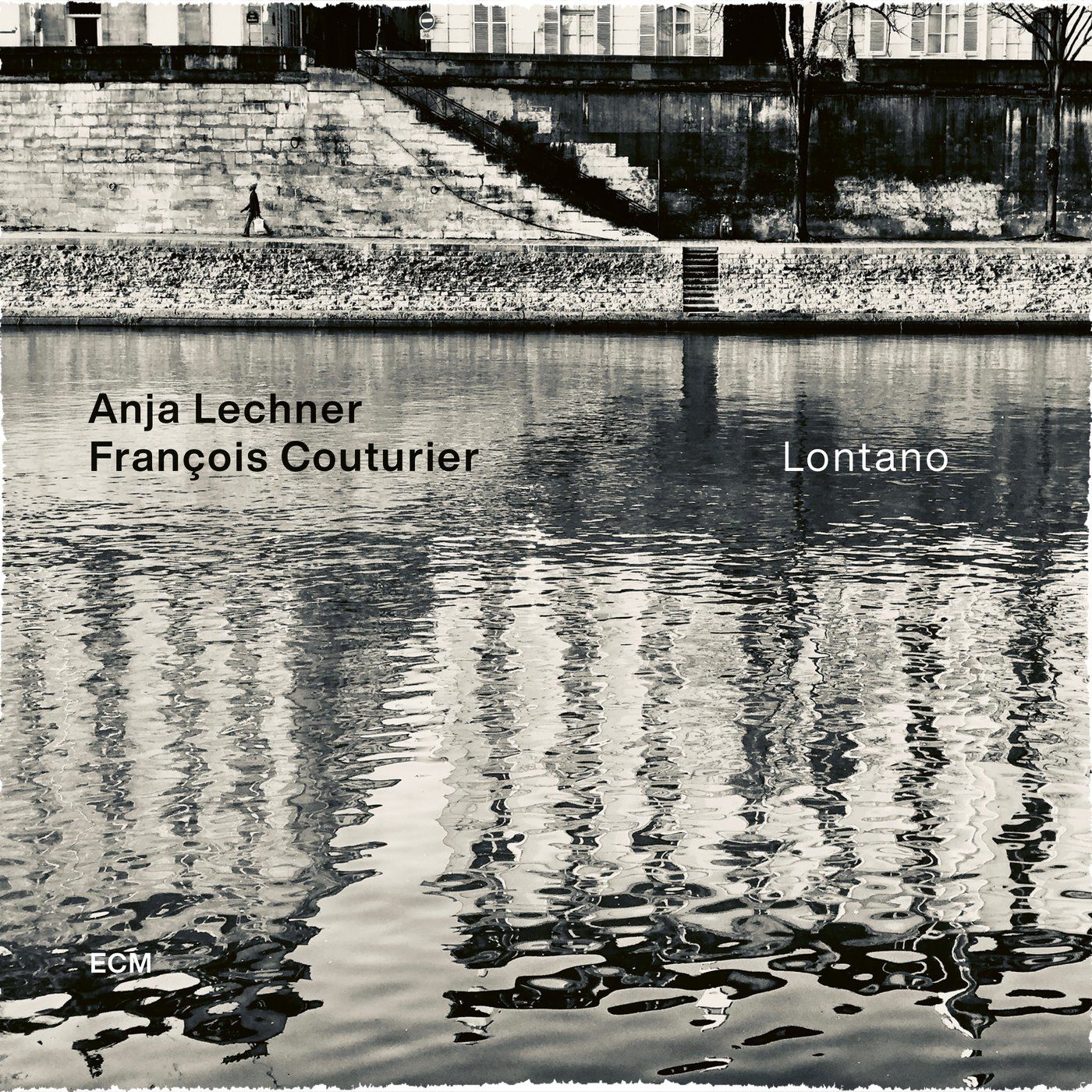
Mostrando entradas con la etiqueta François Couturier. Mostrar todas las entradas
Mostrando entradas con la etiqueta François Couturier. Mostrar todas las entradas
miércoles, 21 de octubre de 2020

lunes, 27 de julio de 2020


miércoles, 5 de abril de 2017
ANOUAR BRAHEM Le pas du chat noir
 These pieces emerged from the keys of a piano. Still affected by the
powerful emotion of the encounter, and the exhaustion which followed the
recording of Thimar, I set the oud aside for a few months,
something that had never happened to me before. It was as though the
music came from there, from the space created by that pause. As though
it was the very expression of that lack. I did not start out with the
intention of writing for the piano. It just replaced the oud. In fact, I
used the piano as an instrument of modal writing. I have always had a
piano in my studio.
These pieces emerged from the keys of a piano. Still affected by the
powerful emotion of the encounter, and the exhaustion which followed the
recording of Thimar, I set the oud aside for a few months,
something that had never happened to me before. It was as though the
music came from there, from the space created by that pause. As though
it was the very expression of that lack. I did not start out with the
intention of writing for the piano. It just replaced the oud. In fact, I
used the piano as an instrument of modal writing. I have always had a
piano in my studio.
Manfred Eicher, to whom I had played a few initial themes in
Carthage, gave me great encouragement to develop them with a view to a
recording. I composed some other pieces. Still for solo piano. The piano
was the main character, the sole protagonist. It was only later on
that the oud came in. It joined the piano gradually, discreetly at
first, then it assumed its place. It was a long time, on the other hand,
before the idea of integrating the accordion came into my head, whereas
it seems obvious to me now. It’s like this music’s inner song.
In particular I would like to thank François Couturier, my
long-standing friend and accomplice, and Jean-Louis Matinier, both of
whom worked tirelessly to communicate the universe of this music, in an
interpretation extremely alert to nuances and tempos, and to the balance
between inner tensions and falls. A tempo passed on to me by the
movement of a tree I could see from my window, swaying gently in the
breeze. (Anouar Brahem)
martes, 4 de abril de 2017
François Couturier / Anja Lechner / Jean-Marc Larché / Jean Louis Matinier TARKOVSKY QUARTET
 In 2005, French pianist François Couturier organized a quartet with cellist Anja Lechner, accordionist Jean-Louis Matinier, and soprano saxophonist Jean-Marc Larché to record Nostalghia: Song for Tarkovsky, released by ECM in 2006, an album that paid tribute to Soviet film director Andrei Tarkovsky
(1932-1986), not by playing music used in his films, but instead by
creating new compositions, played in a jazz/classical hybrid, that
evoked the moods of the filmmaker's works. The group toured as the Tarkovsky Quartet, and the 2011 album Tarkovsky Quartet is a follow-up recording in the same manner; since Couturier's 2009 solo piano CD Un Jour Si Blanc also paid tribute to Tarkovsky, it can be seen as the completion of a trilogy. As with Nostalghia,
the quartet also overtly references various classical composers in the
music, with the opening track, "A Celui Qui a Vu l'Ange," based on Pergolesi's "Stabat Mater," "Doktor Faustus" on Shostakovitch's "Sonata for Violoncello and Piano, Op. 40," and "Maroussia" and "La Passion Selon Andrei" drawing on Johann Sebastian Bach.
The nearly ambient "San Galagno," with its glacially slow presentation
of notes; the oddly atonal "Sardor," a collection of squeaks and
squawks; and "Le Main et l'Oiseau" ("The Hand and the Bird") are all
group improvisations by the four musicians. The actual relation to Tarkovsky is more inferential than specific, as an examination of the titles indicates. Whereas the tracks on Nostalghia often referred to actual Tarkovsky films, those here are more tangential. "Myshkin," for instance, is the name of a character in the fiction of Dostoyevsky about whom Tarkovsky intended to make a movie, but never did; he also wanted to direct a film based on Thomas Mann's
novel Doktor Faustus, but did not. Leaving aside such associations, the
quartet's music can be seen as contemplative, improvisational
third-stream jazz very much in the ECM style, even if the cinematic and
literary allusions are part of the overall appreciation of it. (William Ruhlmann)
In 2005, French pianist François Couturier organized a quartet with cellist Anja Lechner, accordionist Jean-Louis Matinier, and soprano saxophonist Jean-Marc Larché to record Nostalghia: Song for Tarkovsky, released by ECM in 2006, an album that paid tribute to Soviet film director Andrei Tarkovsky
(1932-1986), not by playing music used in his films, but instead by
creating new compositions, played in a jazz/classical hybrid, that
evoked the moods of the filmmaker's works. The group toured as the Tarkovsky Quartet, and the 2011 album Tarkovsky Quartet is a follow-up recording in the same manner; since Couturier's 2009 solo piano CD Un Jour Si Blanc also paid tribute to Tarkovsky, it can be seen as the completion of a trilogy. As with Nostalghia,
the quartet also overtly references various classical composers in the
music, with the opening track, "A Celui Qui a Vu l'Ange," based on Pergolesi's "Stabat Mater," "Doktor Faustus" on Shostakovitch's "Sonata for Violoncello and Piano, Op. 40," and "Maroussia" and "La Passion Selon Andrei" drawing on Johann Sebastian Bach.
The nearly ambient "San Galagno," with its glacially slow presentation
of notes; the oddly atonal "Sardor," a collection of squeaks and
squawks; and "Le Main et l'Oiseau" ("The Hand and the Bird") are all
group improvisations by the four musicians. The actual relation to Tarkovsky is more inferential than specific, as an examination of the titles indicates. Whereas the tracks on Nostalghia often referred to actual Tarkovsky films, those here are more tangential. "Myshkin," for instance, is the name of a character in the fiction of Dostoyevsky about whom Tarkovsky intended to make a movie, but never did; he also wanted to direct a film based on Thomas Mann's
novel Doktor Faustus, but did not. Leaving aside such associations, the
quartet's music can be seen as contemplative, improvisational
third-stream jazz very much in the ECM style, even if the cinematic and
literary allusions are part of the overall appreciation of it. (William Ruhlmann)François Couturier / Anja Lechner / Jean-Marc Larché / Jean-Louis Matinier NOSTALGHIA - SONG FOR TARKOVSKY
 French pianist François Couturier
was inspired by Soviet film director Andrei Tarkovsky (1932-1986) in
creating the music on this album, but it should be noted at the outset
that the album does not contain any music actually used in Tarkovsky's
films in general or his 1983 movie Nostalghia in particular. Rather, Couturier,
who states his admiration for Tarkovsky in his brief liner notes,
saying that has "seen all his films over and over again," tried to evoke
the mood of those films in writing these pieces of music, several of
which share titles with them. Typically, Couturier also borrowed from several classical works, acknowledging that "Le Sacrifice" and "L'Éternal Retour" were "inspired by" Bach's Matthäuspassion; that "Nostalghia" and "Andrei" contain "references to" Alfred Schnittke's Sonata No. 1 for Violoncello and Piano; and that "Toliu" has "allusions to" Pergolesi's Stabat Mater. He took this music to three longtime musical compatriots, cellist Anja Lechner, soprano saxophonist Jean-Marc Larché, and accordionist Jean-Louis Matinier.
The resulting quartet creates a free jazz/contemporary classical hybrid
that will sound familiar to fans of the record label issuing the disc. "Song for Tarkovsky
is a project that fits very naturally in ECM's soundworld," states a
sentence in the album's press release, and that's certainly true. There
are times, notably in the piano work in "Miroir," when one might be
listening to an ECM Keith Jarrett
album, with its haunting, echoed playing. The music arguably does evoke
the style of Tarkovsky's filmmaking, particularly its contemplative
tone and extremely long takes. But listeners don't have to be familiar
with those movies to respond to it. (William Ruhlmann)
French pianist François Couturier
was inspired by Soviet film director Andrei Tarkovsky (1932-1986) in
creating the music on this album, but it should be noted at the outset
that the album does not contain any music actually used in Tarkovsky's
films in general or his 1983 movie Nostalghia in particular. Rather, Couturier,
who states his admiration for Tarkovsky in his brief liner notes,
saying that has "seen all his films over and over again," tried to evoke
the mood of those films in writing these pieces of music, several of
which share titles with them. Typically, Couturier also borrowed from several classical works, acknowledging that "Le Sacrifice" and "L'Éternal Retour" were "inspired by" Bach's Matthäuspassion; that "Nostalghia" and "Andrei" contain "references to" Alfred Schnittke's Sonata No. 1 for Violoncello and Piano; and that "Toliu" has "allusions to" Pergolesi's Stabat Mater. He took this music to three longtime musical compatriots, cellist Anja Lechner, soprano saxophonist Jean-Marc Larché, and accordionist Jean-Louis Matinier.
The resulting quartet creates a free jazz/contemporary classical hybrid
that will sound familiar to fans of the record label issuing the disc. "Song for Tarkovsky
is a project that fits very naturally in ECM's soundworld," states a
sentence in the album's press release, and that's certainly true. There
are times, notably in the piano work in "Miroir," when one might be
listening to an ECM Keith Jarrett
album, with its haunting, echoed playing. The music arguably does evoke
the style of Tarkovsky's filmmaking, particularly its contemplative
tone and extremely long takes. But listeners don't have to be familiar
with those movies to respond to it. (William Ruhlmann)lunes, 3 de abril de 2017
François Couturier UN JOUR SI BLANC

An autonomous and captivating album in its own right, “Un jour si blanc” was conceived by François Couturier
as a second volume in an ideational trilogy, and an extension of the
earlier “Nostalghia: Song for Tarkovsky” (ECM 1979).. The poetic
approach of that disc – evident in the playing itself and in the
referential and allusive conception – finds an echo in this solo piano
album.
It’s the French pianist’s first solo album, and a richly creative
contribution also to the unaccompanied piano genre established at ECM
long ago with landmark recordings of Chick Corea, Paul Bley, and Keith
Jarrett. “Un jour si blanc” was produced by Manfred Eicher at the
Auditorio Radio Svizzera, Lugano – already a noted space for ECM
recordings, including Stefano Bollani’s “Piano Solo” and Marilyn
Crispell’s solo “Vignettes”.
The new album’s starting point was a poem by Andrei Tarkovsky’s father, Arseni Tarkovsky, which gives the disk its title. After this, the recording opens up associatively, making improvisational interconnections. “I wanted to pay tribute to some great artists I particularly like”, says Couturier.
These include Johann Sebastian Bach, Arthur Rimbaud, the painters of the Blaue Reiter group, Claude Debussy, Franz Schubert, Toru Takemitsu, Joan Miró and more. “Lune de miel”, meanwhile, quotes liberally from “I Fall In Love Too Easily”. But if standard jazz is a component of this disc it is filtered through the focus of a player steeped in the European tradition, a player who can readily access the history of classical music and contemporary composition, and a sense for structure is paramount, even when Couturier is in full improvisational flow. (ECM Records)
The new album’s starting point was a poem by Andrei Tarkovsky’s father, Arseni Tarkovsky, which gives the disk its title. After this, the recording opens up associatively, making improvisational interconnections. “I wanted to pay tribute to some great artists I particularly like”, says Couturier.
These include Johann Sebastian Bach, Arthur Rimbaud, the painters of the Blaue Reiter group, Claude Debussy, Franz Schubert, Toru Takemitsu, Joan Miró and more. “Lune de miel”, meanwhile, quotes liberally from “I Fall In Love Too Easily”. But if standard jazz is a component of this disc it is filtered through the focus of a player steeped in the European tradition, a player who can readily access the history of classical music and contemporary composition, and a sense for structure is paramount, even when Couturier is in full improvisational flow. (ECM Records)
François Couturier / Tarkovsky Quartet NUIT BLANCHE
 Following their sublime duo outing, Moderato Cantabile (ECM, 2014), cellist Anja Lechner
and François Couturier reunite in the pianist's quartet responsible for
two-thirds of a recorded trilogy for ECM Records, all devoted to Soviet
filmmaker Andrei Tarkovsky, whose name would ultimately become
synonymous with the group: Tarkovsky Quartet.
Following their sublime duo outing, Moderato Cantabile (ECM, 2014), cellist Anja Lechner
and François Couturier reunite in the pianist's quartet responsible for
two-thirds of a recorded trilogy for ECM Records, all devoted to Soviet
filmmaker Andrei Tarkovsky, whose name would ultimately become
synonymous with the group: Tarkovsky Quartet.
Bookending Couturier's second album of the trilogy, 2010's solo piano session Un jour si blanc, 2006's Nostalghia—Songs for Tarkovsky and 2011's Tarkovsky Quartet established Couturier's quartet—also featuring soprano saxophonist Jean March Larche and accordionist Jean Louis Matinier—as
a chamber-like group with increasingly deep chemistry, a particularly
profound allegiance to the value of space and significance of decay, and
an ability to improvise and/or interpret with equal parts discretion
and taste, whether it's vividly lyrical or more jaggedly angular,
thoroughly scripted or completely open-ended.
With Nuit Blanche,
Couturier's trilogy becomes a quadrilogy, as his quartet expands its
horizons even farther than ever before on an album that explores
ambiguous nether-regions of time, space and consciousness. Being from a
group that may not record or perform together as often as they (or their
fans) might like, there are other projects that keep the internal
chemistry growing...and in contexts that, as different as they are,
provide grist for alternative explorations when everyone comes together
as Tarkovsky Quartet.
sábado, 6 de septiembre de 2014
Anja Lechner / François Couturier KOMITAS - GURDJIEFF - MOMPOU Moderato Cantabile

After a decade of shared work in the Tarkovsky Quartet and an ongoing
alliance in the Pergolesi Project (with singer Maria Pia De Vito),
German cellist Anja Lechner and French pianist François Couturier unveil
their new duo. The players approach the music from different vantage
points: Lechner is a classical soloist with an uncommon interest in
improvisation, Couturier a jazz musician travelling ever further from
jazz. On Moderato cantabile they present their own arrangements
of works by three fascinating outsiders from the margins of music
history – G.I. Gurdjieff, Komitas, and Federico Mompou. To differing
degree their music reveals influences from the east, both in terms of
relationship to folk traditions and religious music, and
philosophically. A contemplative air pervades the session. The programme
has connections to Anja Lechner’s acclaimed account of Gurdjieff’s
music on the earlier Chants, Hymns and Dances (with Vassilis
Tsabropoulos), but the new duo has its own identity, and time spent in
Armenia has deepened Lechner’s understanding of the contexts from which
the music emerged: her cello assumes almost a singer’s role in these
pieces, exploring the strong melodies. François Couturier’s compositions
function as both contrasting and complementary elements. As a player,
François has a long history of working with Mompou’s music. He has been
influenced, furthermore, by his association with Anouar Brahem, and the
sonorities of the Middle East are part of his palette. Moderato cantabile,
a striking and unusual album, was recorded in the rich acoustics of the
Lugano studio in November 2013 and produced by Manfred Eicher.
Franҫois Couturier is featured here both as player and composer and his pieces function as both contrasting and complementary elements. As the liner notes point out, “Years spent in the company of Tunisian oud master Anouar Brahem seem to have reinforced a contemplative element in Couturier’s own idiom as player, composer, arranger. A reflective patience is characteristic of much of his work. In his music, with or without a score, themes tend to be slowly unfolded and developed. His compositions are ‘evolutionary’, open to change in the moment, and his improvisations maintain a lyrical awareness and sense of form. Unlike many improvising contemporaries he is unafraid to broach the brink of silence – making him perhaps a natural interpreter for Mompou’s Música Callada.” Couturier has previously played arrangements of Mompou in jazz piano trio contexts, and the Catalan composer has been an important reference for him, just as the Transcaucasian Gurdjieff and the Armenian Komitas Vardapet have been important references for Lechner. The cellist first came to understand Komitas’s role in bridging Armenian secular and sacred music though her work with Tigran Mansurian. Her interpretations of Gurdjieff, meanwhile, had a powerful impact in Armenia, and inspired the foundation of the Gurdjieff Folk Instruments Ensemble. Once again on Moderato cantabile Lechner and Couturier, with their new arrangements of Komitas, Gurdjieff and Mompou, show us that this music responds to a freely interpretative approach. Moderato cantabile was recorded in the rich acoustics of Lugano’s Auditorio Radiotelevisione svizzera in November 2013, and produced by Manfred Eicher. Anja Lechner, born in Kassel, Germany, studied with Heinrich Schiff and Janos Starker. She has performed as soloist with orchestras including the Amsterdam Sinfonietta, the Armenian Philharmonic Orchestra, the Slowakische Philharmonie, and the Tallinn Chamber Orchestra, and plays chamber music with partners including pianists Alexei Lubimov, Silke Avenhaus and Kirill Gerstein, cellist Agnès Vesterman, violinist Patricia Kopatchinskaja, and clarinetist Reto Bieri. Lechner has premiered compositions by Tigran Mansurian, Valentin Silvestrov, Tõnu Kõrvits and Annette Focks amongst others. For 18 years she was the cellist of the Rosamunde Quartet, whose acclaimed ECM New Series albums embraced a scope of music from Joseph Haydn to Thomas Larcher. Her most recent recordings include Mansurian’s Quasi Parlando and Double Concerto with the Amsterdam Sinfonietta. In preparation is an album of solos and duos with Agnès Vesterman, playing compositions of Silvestrov. At home in all aspects of classical music, she is also fluent in diverse improvisational traditions, and has a long-running collaboration with bandoneonist Dino Saluzzi – documented in the film El Encuentro and on albums including Ojos Negros and Navidad de Los Andes. François Couturier began playing piano at the age of six. After completing studies in classical music and musicology in the early 1970s, he began improvising in earnest, initially taking his cue from Paul Bley, Chick Corea and Joachim Kühn. In 1980 he won France’s Prix Django Reinhardt which raised his international profile, and shortly thereafter joined John McLaughlin’s group, touring and recording with the English guitarist. Couturier’s first appearance on ECM was on Anouar Brahem’s Khomsa in 1994. From 2001, he toured widely with the oud player in trio with accordionist Jean-Louis Matinier, and is featured on the albums Le pas du chat noir and Voyage de Sahar. He also appears on Brahem’s forthcoming album Souvenance: Music for oud, quartet and string orchestra. His recordings with Anja Lechner include Nostalghia – Song for Tarkovsky and Tarkovsky Quartet which incorporate his compositions as well as group improvising. Il Pergolese features his arrangements of music of Giovanni Battista Pergolesi. Other Couturier recordings on ECM are Poros, duets with violinist Dominique Pifarély, and the solo piano album Un jour si blanc.
Franҫois Couturier is featured here both as player and composer and his pieces function as both contrasting and complementary elements. As the liner notes point out, “Years spent in the company of Tunisian oud master Anouar Brahem seem to have reinforced a contemplative element in Couturier’s own idiom as player, composer, arranger. A reflective patience is characteristic of much of his work. In his music, with or without a score, themes tend to be slowly unfolded and developed. His compositions are ‘evolutionary’, open to change in the moment, and his improvisations maintain a lyrical awareness and sense of form. Unlike many improvising contemporaries he is unafraid to broach the brink of silence – making him perhaps a natural interpreter for Mompou’s Música Callada.” Couturier has previously played arrangements of Mompou in jazz piano trio contexts, and the Catalan composer has been an important reference for him, just as the Transcaucasian Gurdjieff and the Armenian Komitas Vardapet have been important references for Lechner. The cellist first came to understand Komitas’s role in bridging Armenian secular and sacred music though her work with Tigran Mansurian. Her interpretations of Gurdjieff, meanwhile, had a powerful impact in Armenia, and inspired the foundation of the Gurdjieff Folk Instruments Ensemble. Once again on Moderato cantabile Lechner and Couturier, with their new arrangements of Komitas, Gurdjieff and Mompou, show us that this music responds to a freely interpretative approach. Moderato cantabile was recorded in the rich acoustics of Lugano’s Auditorio Radiotelevisione svizzera in November 2013, and produced by Manfred Eicher. Anja Lechner, born in Kassel, Germany, studied with Heinrich Schiff and Janos Starker. She has performed as soloist with orchestras including the Amsterdam Sinfonietta, the Armenian Philharmonic Orchestra, the Slowakische Philharmonie, and the Tallinn Chamber Orchestra, and plays chamber music with partners including pianists Alexei Lubimov, Silke Avenhaus and Kirill Gerstein, cellist Agnès Vesterman, violinist Patricia Kopatchinskaja, and clarinetist Reto Bieri. Lechner has premiered compositions by Tigran Mansurian, Valentin Silvestrov, Tõnu Kõrvits and Annette Focks amongst others. For 18 years she was the cellist of the Rosamunde Quartet, whose acclaimed ECM New Series albums embraced a scope of music from Joseph Haydn to Thomas Larcher. Her most recent recordings include Mansurian’s Quasi Parlando and Double Concerto with the Amsterdam Sinfonietta. In preparation is an album of solos and duos with Agnès Vesterman, playing compositions of Silvestrov. At home in all aspects of classical music, she is also fluent in diverse improvisational traditions, and has a long-running collaboration with bandoneonist Dino Saluzzi – documented in the film El Encuentro and on albums including Ojos Negros and Navidad de Los Andes. François Couturier began playing piano at the age of six. After completing studies in classical music and musicology in the early 1970s, he began improvising in earnest, initially taking his cue from Paul Bley, Chick Corea and Joachim Kühn. In 1980 he won France’s Prix Django Reinhardt which raised his international profile, and shortly thereafter joined John McLaughlin’s group, touring and recording with the English guitarist. Couturier’s first appearance on ECM was on Anouar Brahem’s Khomsa in 1994. From 2001, he toured widely with the oud player in trio with accordionist Jean-Louis Matinier, and is featured on the albums Le pas du chat noir and Voyage de Sahar. He also appears on Brahem’s forthcoming album Souvenance: Music for oud, quartet and string orchestra. His recordings with Anja Lechner include Nostalghia – Song for Tarkovsky and Tarkovsky Quartet which incorporate his compositions as well as group improvising. Il Pergolese features his arrangements of music of Giovanni Battista Pergolesi. Other Couturier recordings on ECM are Poros, duets with violinist Dominique Pifarély, and the solo piano album Un jour si blanc.
martes, 29 de octubre de 2013
Maria Pia de Vito / François Couturier / Anja Lechner / Michele Rabbia IL PERGOLESE

A project paying tribute to 18th century composer Giovanni Battista Pergolesi
(1710 – 1736), Il Pergolese presents new arrangements and improvisation
inspired by opera and sacred music. Singer Maria Pia De Vito, pianist François
Couturier, cellist Anja Lechner and percussionist Michele Rabbia also consider
Pergolesi’s relationship to the art music and the popular music of Naples from a
contemporary perspective,. The text of the Stabat Mater – translated into
Neapolitan by Maria Pia De Vito – and the opera arias, are transformed into
songs and vivid narrative, open frames providing the key to reinterpreting
Pergolesi. François Couturier's arrangements widen Pergolesi's structures,
offering space for much improvisational interaction. For Il Pergolese is
a real group project with creative from all participants, a discourse among
sounds with rhythms generated by drums and metals and sampled and real-time
electronics. “Sound textures grow dense with the richness of instrumental
counterpoint or are set free in electronic soundscapes and along coloristic,
percussive lines, as cello becomes voice or voice becomes an instrument” says
Maria Pia De Vito in a performer’s note in the CD booklet.
The project
was commissioned by the Festival Pergolesi-Spontini of Jesi in 2011. Reviewing
the premiere performance, Augusta Franco Cardinali of Voce della
Vallesina wrote of “unforeseen impressions for the listener. Crystallized
sound fragments expand into flares of notes like meteors. Pergolesi’s music
emerges, becomes increasingly recognizable until it is transformed into
prayer... This music, in which different styles are blended together, cannot be
categorized. It would be inexact to call it ‘experimental music’, since its
sound material, both vocal and instrumental, is treated with uncommon
sensitivity, competence, intelligence, and stylistic elegance as well as
technical expertise...” The improvisational component ensures that each
performance of Il Pergolese is unique. The present interpretation was
recorded in Lugano in December 2012, with Manfred Eicher as
producer.
Three of the protagonists of Il Pergolese – François
Couturier, Anja Lechner and Michele Rabbia are well-known to ECM listeners.
German cellist Lechner has appeared on more than twenty ECM recordings playing
everything from tango with Dino Saluzzi to compositions of Mansurian and
Silvestrov with the Rosamunde Quartet or arrangements of Gurdjieff with Vassilis
Tsabropoulos. At home with both improvisation and the classical tradition,
Lechner is, with Dino Saluzzi, the subject of the documentary film “El
Encuentro” made by Norbert Wiedmer & Enrique Ros and recently issued by ECM
on DVD.
French pianist François Couturier is the founder-composer of the
Tarkovsky Quartet, of which Anja Lechner is a member, and also plays in duo with
the cellist. Couturier’s other ECM albums include
a solo recording Un jour si blanc, and a duo disc with violinist
Dominique Pifarély, as well as recordings with Tunisian oud master Anouar
Brahem.
Italian percussionist Michele Rabbia has been the principal
drummer of Stefano Battaglia’s projects since 2000 and appears on several ECM
discs with the pianist including Raccolto, Re: Pasolini and
Pastorale a disc of duets incorporating his live electronic treatments.
Rabbia has collaborated with numerous musicians, the long list including Enrico
Rava, Charlie Mariano, Antonello Sallis, Dominique Pifarély, Rita Marcotuli, the
Italian Instabile Orchestra, Sainkho Namchylak, Paul McCandless and many
others.
Singer Maria Pia De Vito makes her ECM debut with Il
Pergolese. She has long been active in improvisation and jazz with musical
partners including John Taylor, Ralph Towner, Rita Marcatouli, Norma Winstone,
Steve Swallow, Paolo Fresu, Gianluigi Trovesi, Giorgio Gaslini, Colin Towns and
many more. Musical research, exploring beneath the work’s surfaces, has been a
key element of her performances from the outset, whether the music at hand has
been jazz of the American songbook, idiosyncratic Neapolitan vocal music (De
Vito is herself a native of Naples), adaptations of Monteverdi with Bruno
Tommaso or – as on the present disc – Pergolesi as an improvisational
resource.
Suscribirse a:
Entradas (Atom)

-
Music Is The Key will be closing soon. Over the last year maintaining this site and keeping it up to date has become an expensive and tim...

