
Mostrando entradas con la etiqueta Franz Schreker. Mostrar todas las entradas
Mostrando entradas con la etiqueta Franz Schreker. Mostrar todas las entradas
lunes, 6 de abril de 2020

lunes, 18 de febrero de 2019
FRIEDRICH CERHA / FRANZ SCHREKER
 As Hans-Klaus Jungheinrich points out in his liner notes, Friedrich
Cerha (born 1926 in Vienna) is a musician who has stood above the
“schismatic rivalries” of musical modernism, being one of very few
composers associated with both streams of Viennese dodecaphony: J.M.
Hauer’s on one side, and Schoenberg’s on the other. The post-Schoenberg
school is especially indebted to him for his completion of Act 3 of
Alban Berg’s “Lulu”. Around the world, the work continues to be
performed in Cerha’s version. In 1958 Friedrich Cerha co-founded the
ensemble ‘die reihe’ which remained under his direction until 1983 and
continues to be a committed force in the cause of contemporary music.
Cerha’s orchestral cycle “Spiegel” and his operas “Baal” and “Der
Rattenfänger” are amongst his major works.
As Hans-Klaus Jungheinrich points out in his liner notes, Friedrich
Cerha (born 1926 in Vienna) is a musician who has stood above the
“schismatic rivalries” of musical modernism, being one of very few
composers associated with both streams of Viennese dodecaphony: J.M.
Hauer’s on one side, and Schoenberg’s on the other. The post-Schoenberg
school is especially indebted to him for his completion of Act 3 of
Alban Berg’s “Lulu”. Around the world, the work continues to be
performed in Cerha’s version. In 1958 Friedrich Cerha co-founded the
ensemble ‘die reihe’ which remained under his direction until 1983 and
continues to be a committed force in the cause of contemporary music.
Cerha’s orchestral cycle “Spiegel” and his operas “Baal” and “Der
Rattenfänger” are amongst his major works.
In 1989 the Wien Modern Festival commissioned a cello concerto from Cerha. The result was “Phantasiestück in C’s Manier”, now the 2nd
movement of the present three-movement concerto completed in 1996, in
response to a commission from the Berlin Festival. It is a powerful work
of concentrated energy and textural density. Cerha notes that
“Intricacy and multi-layeredness are characteristic elements of my
recent essays in concerto form.” Cerha sets Heinrich Schiff some tough
challenges in his journey through the ever-changing symphonic fabric,
and brings the solo cello into arresting timbral combinations with
unorthodox instrumentation that includes organ, soprano sax and conga
drums, as well as more conventional orchestral forces. Jungheinrich:
“The point is not so much colouristic effects as rather, in Cerha’s
words, the ‘integration of fundamental modes of musical cognition.’”
Friedrich Cerha has been awarded a number of composition prizes, including the Prize of the City of Vienna (1974) and the Great Austrian State prize (1986) - which he donated for performances of works by young composers. In 2006 he was given the Golden Lion for Lifetime Achievement (leone doro alla carriera) of the Biennale di Venezia.
Franz Schreker’s Chamber Symphony in one movement is a richly inventive work in glowing timbres written in the middle of World War I, in 1916, to celebrate the centenary of the Vienna Academy of Music. Schreker (1878-1934) loved sound above all, dreamed of new instruments, and tried to substitute for their absence with compound blendings. “I often hear sounds that can scarcely be realized with existing means”, he admitted. His visions were timbral, biographer Christopher Hailey has noted, “his complex emotional insights captured in the iridescence of his orchestra.” He sought “a dematerialized array of ever-changing colours. No work better captures this sonic ideal than his Chamber Symphony…Its shimmering opening, in which first the flute, then the violins float above the aural mists of celesta, harmonium, piano and harp, is music of otherworldly magic.”
Friedrich Cerha has been awarded a number of composition prizes, including the Prize of the City of Vienna (1974) and the Great Austrian State prize (1986) - which he donated for performances of works by young composers. In 2006 he was given the Golden Lion for Lifetime Achievement (leone doro alla carriera) of the Biennale di Venezia.
Franz Schreker’s Chamber Symphony in one movement is a richly inventive work in glowing timbres written in the middle of World War I, in 1916, to celebrate the centenary of the Vienna Academy of Music. Schreker (1878-1934) loved sound above all, dreamed of new instruments, and tried to substitute for their absence with compound blendings. “I often hear sounds that can scarcely be realized with existing means”, he admitted. His visions were timbral, biographer Christopher Hailey has noted, “his complex emotional insights captured in the iridescence of his orchestra.” He sought “a dematerialized array of ever-changing colours. No work better captures this sonic ideal than his Chamber Symphony…Its shimmering opening, in which first the flute, then the violins float above the aural mists of celesta, harmonium, piano and harp, is music of otherworldly magic.”
viernes, 26 de octubre de 2018
Marlis Petersen / Camillo Radicke DIMENSIONEN - ANDERSWELT
 The Otherworld... The human being rooted in the world that sees only
what the eye can see… Does he at once dare a glance to the side where
nature, spirits and elemental beings reside? Not many of us have kept
the ability to view them and get in contact. This release offers you the
‘Otherworldly’ eye from the early Romantic period up to the classical
modernism, including the Northern countries (Iceland, Norway, Sweden,
Denmark and Finland), and now hope you allow yourself to be "lost to the
world"… Plunge into the magical world of twilight - populated with
elemental spirits, elves, waterlilies, nymphs and merman. The creatures
of the unseen are the protagonists of this classical song album and
tempt the listener into their legendary realms. Carl Loewe, Johannes
Brahms, Max Reger, Nikolai Medtner, Hugo Wolf, Alexander Zemlinsky,
Franz Schreker, Hans Sommer and many more engaged themselves in this
mystic world and set it in music in a very sensual and playful way!
The Otherworld... The human being rooted in the world that sees only
what the eye can see… Does he at once dare a glance to the side where
nature, spirits and elemental beings reside? Not many of us have kept
the ability to view them and get in contact. This release offers you the
‘Otherworldly’ eye from the early Romantic period up to the classical
modernism, including the Northern countries (Iceland, Norway, Sweden,
Denmark and Finland), and now hope you allow yourself to be "lost to the
world"… Plunge into the magical world of twilight - populated with
elemental spirits, elves, waterlilies, nymphs and merman. The creatures
of the unseen are the protagonists of this classical song album and
tempt the listener into their legendary realms. Carl Loewe, Johannes
Brahms, Max Reger, Nikolai Medtner, Hugo Wolf, Alexander Zemlinsky,
Franz Schreker, Hans Sommer and many more engaged themselves in this
mystic world and set it in music in a very sensual and playful way!
miércoles, 5 de septiembre de 2018
Grupo Encuentros / Alicia Terzian 40 YEARS OF CONTEMPORARY MUSIC
 Since composer, conductor and
musicologist Alicia Terzian founded Grupos Encuentros in 1978, the
six-person group has garnered international acclaim for its success at
bringing the music of avant-garde Argentinian and Latin American
composers to the world. On 40 YEARS OF CONTEMPORARY MUSIC, their debut
recording for NAVONA RECORDS, the group combines compositions from such
well-known Latin American composers as Heitor Villa-Lobos, Alberto
Ginastera, and Terzian herself with works by an international array of
composers that ranges from Anton Webern (Germany) to Luciano Berio
(Italy) to Franz Schreker (Austria) to Pierre Boulez (France).
Since composer, conductor and
musicologist Alicia Terzian founded Grupos Encuentros in 1978, the
six-person group has garnered international acclaim for its success at
bringing the music of avant-garde Argentinian and Latin American
composers to the world. On 40 YEARS OF CONTEMPORARY MUSIC, their debut
recording for NAVONA RECORDS, the group combines compositions from such
well-known Latin American composers as Heitor Villa-Lobos, Alberto
Ginastera, and Terzian herself with works by an international array of
composers that ranges from Anton Webern (Germany) to Luciano Berio
(Italy) to Franz Schreker (Austria) to Pierre Boulez (France).
Grupo Encuentros consists of mezzo soprano Marta
Blanco, pianist Claudio Espector, flutist Fabio Mazzitelli, clarinetist
Matias Tchicourel, violinist Sergio Polizzi and violoncellist Carlos
Nozzi. In this CD, saxophonist Maria Noel Luzzardo, oboist Ruben
Albornoz, bassoonist Ernesto Imsand and percussionist Arauco Yepes
join Encuentros Group. The program presented on 40 YEARS OF CONTEMPORARY
MUSIC originally premiered at the annual Encuentros International
Festivas in Buenos Aires and truly highlights the brilliance of these
award-winning musicians, who have earned high praise from such media
outlets as the Los Angeles Times, where they were lauded as “deeply
serious and challenging.” Over their 40 year-long career, the group has
performed in more than 300 concert halls and festivals of the main
cities of five continents including London’s Royal Albert Hall and New
York City’s Merkin Auditorium.
40 YEARS OF CONTEMPORARY MUSIC transcends cultural boundaries with such selections as Villa-Lobos’ Choro No 7,
which unites the sounds of Amerindian primitivism with the polkas and
waltzes of suburban dance halls in Brazil. Emphasizing her status as a
renowned ethnomusicologist, Terzian dedicates her composition Yagua Ya Yuca to the Chiriguano and Chanel peoples, who belong to a lost indigenous northwestern Argentinian culture O King
was composed the same year as the assassination of Martin Luther King, a
tragedy which deeply affected its Italian composer Luciano Berio.
Grupo Encuentros founder Alicia Terzian has
composed over 80 compositions for orchestras, orchestra with soloist,
and chamber orchestras with and without soloists, musical theater,
dance, and multimedia. She travels the world giving seminars on
composition and contemporary chamber music at European and American
universities and is often invited to participate on juries at
international compositions.
viernes, 4 de agosto de 2017
Benjamin Appl / James Baillieu HEIMAT
 Anyone who enjoyed Benjamin Appl’s previous disc, a Schubert recital
(Wigmore Hall Live, 7/16), will recognise the same qualities on this new
album, the first fruit of a newly forged relationship with Sony
Classical. The voice has a burnished, oaky beauty as well as
considerable sweetness (well captured in Sony’s natural engineering),
while the interpretations are suffused with a gentle intelligence, an
instinct for unforced but direct communication and what feels like a
real love for the repertoire. The latter characteristic is even more in
evidence in this project, one which has a disarming personal element: a
carefully assembled programme that explores not just the abstract
concept of ‘Heimat’ but also the young baritone’s relationship with his
two homelands, original and adopted.
Anyone who enjoyed Benjamin Appl’s previous disc, a Schubert recital
(Wigmore Hall Live, 7/16), will recognise the same qualities on this new
album, the first fruit of a newly forged relationship with Sony
Classical. The voice has a burnished, oaky beauty as well as
considerable sweetness (well captured in Sony’s natural engineering),
while the interpretations are suffused with a gentle intelligence, an
instinct for unforced but direct communication and what feels like a
real love for the repertoire. The latter characteristic is even more in
evidence in this project, one which has a disarming personal element: a
carefully assembled programme that explores not just the abstract
concept of ‘Heimat’ but also the young baritone’s relationship with his
two homelands, original and adopted.
It’s a delightful selection, split up further into evocative
subheadings, which mixes songs familiar and less well known, the
expected with the unexpected. Schubert, Wolf and Brahms dominate the
larger, German part of the programme, beautifully performed. But we also
have the disarming, twinkling simplicity of Reger’s ‘Des Kindes Gebet’,
as well as Adolf Strauss’s suave ‘Ich weiss bestimmt’, presented with a
gentle pathos and sophistication that quietly underlines the tragedy of
its having been composed in Terezín – here, as throughout, the
piano-playing of James Baillieu is superb.
Appl’s move to the UK is announced in a confused whirl with Poulenc’s Hyde Park
and then a half a dozen songs in English, with a slightly more folksy
tone. You’ll have to go a long way to hear more enchanting accounts of
Britten’s ‘Greensleeves’, Ireland’s ‘If there were dreams to sell’ or
Bishop’s ‘Home, sweet home’. Appl’s English, unsurprisingly, cannot be
faulted. The two Grieg songs that make up the epilogue are outstanding,
too. But the final moments of an otherwise near-ideal account of ‘Ein
Traum’ highlight one reservation. The voice is very beautiful across a
broad range but it remains a great deal happier up to forte than above it, where it loses flexibility and can develop a slightly fuzzy, even woofy quality.
It’s an issue that will hopefully be ironed out as Appl develops. As
it is, though, there is more than enough quality in his singing, and
pleasure to be had from his musicianship and interpretative instincts,
for this charming and often moving disc to be confidently recommended. (Gramophone)
miércoles, 17 de mayo de 2017
Christiane Karg PORTRAIT
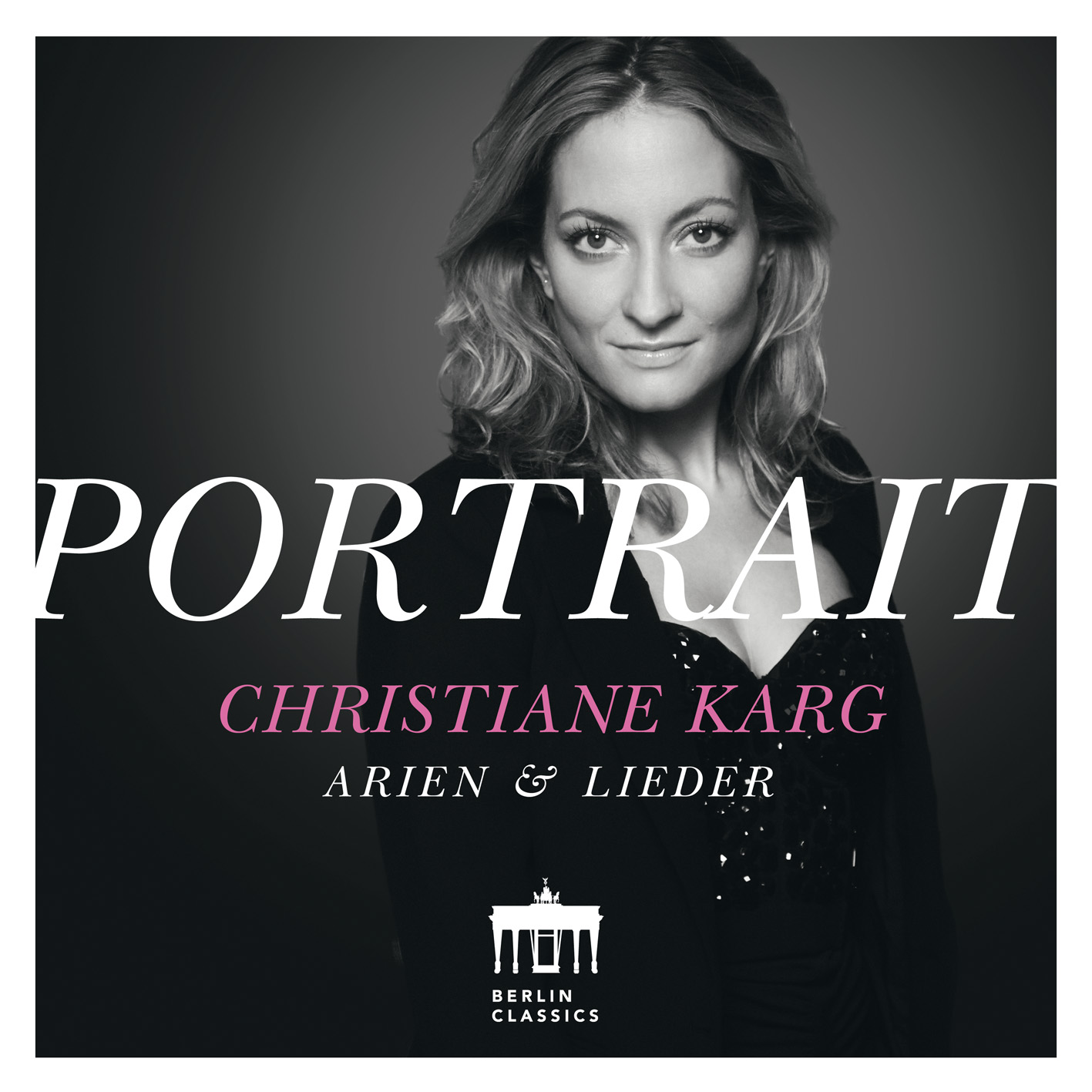
"All of the recordings I have borrowed from, whether they be pure lieder programmes with Burkhard Kehring and Malcolm Martineau, or those with Jonathan Cohen and his ensemble Arcangelo, are the fruit of longstanding ideas, the outcome of hours of sifting through material in libraries and archives, and the result of discussions with artistic colleagues. All of these pieces provide some form of insight into my inner thoughts, my very soul." (Christiane Karg)
Suscribirse a:
Entradas (Atom)
