Mostrando entradas con la etiqueta Robin Michael. Mostrar todas las entradas

miércoles, 5 de diciembre de 2018

DANCE MAZE Chamber Music by TOM ARMSTRONG

Resonus is proud to present a programme of world premiere recordings of chamber music by the contemporary British composer Tom Armstrong.
Performed by an impressive line-up of musicians for whom the pieces were originally composed, this unique programme explores the processes of revision and re-working, from minor alterations to radical re-examinations of the same musical materials.

martes, 22 de noviembre de 2016

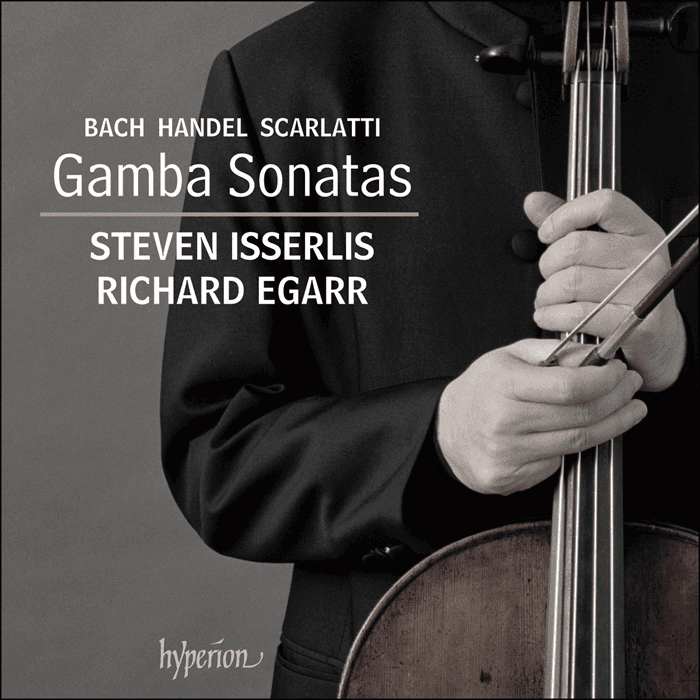
Steven Isserlis / Richard Egarr BACH – HANDEL – SCARLATTI Gamba Sonatas

None of these pieces was written for cello and harpsichord, and at no stage does that matter one bit. Bach’s sonatas for viola da gamba and harpsichord may not have been conceived for that combination but they are such sublime creations that the identity of the instruments is perhaps the last thing that should worry us. Rather, it is the performers’ musicianship that counts, and in this case that is of high quality indeed. 
Steven Isserlis makes no attempt to make his cello imitate the wispy resonance of the gamba, instead claiming the music for his instrument with vigorously articulated lines, robust technical athleticism and ravishing cantabile. Indeed, it is this wondrous singing quality—which never loses its bearing and employs vibrato only as one of its discreet expressive elements—that stands out in these performances, its presence felt above all in the slow movements, of course, but also constantly governing the sense of line in busier ones. Also telling is the profound awareness of architecture and the inter-relationship of movements, for instance in the gathering joy with which the finale of BWV1027 picks us off the floor following the sudden shaft of desolation that has ended the preceding Andante (astutely likened by Isserlis to ‘Es ist vollbracht’ from the St John Passion). In short, these are full-blooded but sensitive readings which, far from being contrary to Bach’s spirit, seem rather to magnify it. 
Isserlis is excellently partnered at every turn by Richard Egarr’s bustling harpsichord-playing, though I would have liked a greater presence for it in the balance to give more definition to the unsupported bass-line. In the two non-Bach items—sonatas probably originally conceived for violin and continuo by Handel and Scarlatti (the latter working up a fiery head)—the balance works better, with Egarr typically inventive and Robin Michael’s lightly drawn doubling of the bass adding just enough weight without drawing attention to itself. Otherwise, they show the same quality in performance as the Bach—namely first-class. (Gramophone)

jueves, 26 de junio de 2014

Fidelio Trio MICHAEL NYMAN Piano Trios 1992 - 2010

MN Records is aiming to record the complete chamber works of Michael Nyman. Here are the first fruits, two volumes that help provide a portrait of this fascinating figure. The first is subtitled, “Piano Trios 1992–2010.” Originally written for the Michael Nyman Band and the film of the title’s name in 2000, this 2010 version of Poczatek is given here in a version prepared specially for the Fidelio Trio. The film was commissioned by the Polish Cultural Institute to accompany the composer’s own choice of excerpts from Polish film. The performance here positively sparkles. Rhythmically skipping unison lines are full of vitality. An objectivized element to the performance only serves to make the listening experience of this sequence of vignettes all the more refreshing. The piece is beautifully varied, and finds Nyman painting in principally primary colors.
The Photography of Chance (2004) was commissioned to celebrate the landscape of Utah and is dedicated to the British disc jockey John Peel. As in the case of Poczatek , this disc presents the premiere recording. There are some tremendously poignant long lines, contrasted with more active, gestural sections that seem to link to Messiaen. It is a tremendously interesting, involving score whose inner vitality is supremely rendered here by the Fidelio Trio. Nyman plays on the contrast of the two planes of expression effectively. It sustains its 20 minute duration with ease. The 2002 piece Yellow Beach is described by the composer as a “transfigured version of Come Unto Thee Yellow Sands performed by the Michael Nyman Band in Prospero’s Books. ” Engaging and yet at times massively expressive, Yellow Beach emerges as a masterpiece of concise writing (it lasts 6:23). Finally for this disc, the 20-minute Time Will Pronounce , its title taken from lines of a poem by Joseph Brodsky that concerns the deaths in Bosnia in 1992. Nyman divides the instrumental group into piano as one unit and strings acting together as another unit. It sounds like there is some sort of rhythmic powerhouse generator enlivening the performance, such is the intensity of the players. There is much beauty here also (try the section around nine minutes in), and instrumental effects are used tastefully. This piece also holds the most purely minimalist music, and it seems perfectly placed. The sense of timelessness of the work’s closing section is quite mesmerically done here.
(FANFARE: Colin Clark)