jueves, 13 de abril de 2017

MEREDITH MONK Book of Days

Meredith Monk is generally described as an avant-garde artist of many talents. Of her many talents there is no question, but what exactly makes her “avant-garde”? The Random House Dictionary defines the term as meaning “of or pertaining to the experimental treatment of artistic, musical, or literary material.” This raises another question: What does it mean to be experimental? The same dictionary gives us: “founded on…an act or operation for the purpose of discovering something unknown or of testing a principle.” At the risk of reading too much into semantics, I would venture to say that Monk is anything but avant-garde, for she is interested neither in discovering the unknown nor in proving suppositions. Rather, she reveals that which has been obscured by, as well as changed by, history. She interrogates the subjective over the empirical and its effect on the flow of intercontinental relations. Thus do we get Book of Days (1988), a marriage of music and moving images that covers such broad yet related topics as nuclear holocaust, AIDS, eschatological wonder and trepidation, and the cyclical nature of time. The idea for Book of Days came to Monk one afternoon in the summer of 1984, when she was overcome by a black-and-white vision of a young Jewish girl in a medieval street. This same figure would become the locus for much of the film’s traumatic crossfire, amid which the girl has visions of her own, only for her they are of a grave and violent future. She soon encounters a madwoman (played by Monk herself) and discovers in her that one kindred spirit in a world headed for annihilation.
The film’s soundtrack was later reworked into the studio version recorded here and scored for 12 voices, synthesizer, cello, bagpipe, hurdy-gurdy, piano, and hammered dulcimer. The music of Book of Days also wavers between past and future, rendering the present all but graspable. These temporal concepts are accordingly reflected in the arrangements of each itinerant section. A triptych of monodies (“Early Morning Melody,” “Afternoon Melodies,” and “Eva’s Song”) mark the passage of the sun in the sky, the contrast of dark and light. This diurnal atmosphere is further underscored with the hurdy-gurdy-infused “Dusk” and the smooth braid of vocal beauty that is “Evening.” This chronology culminates with the delicate “Dream,” an all-too-brief reprieve from the threat of Armageddon, before opening into “Dawn.” The five scattered pieces that make up “Travellers” constitute time as diaspora, each its own lilting pseudo-canon of both hummed and open-mouthed syllables. The fourth section, subtitled “Churchyard Entertainment,” fleshes out the thematic core of the entire work in its most fully realized form. In a similar vein, “Fields/Clouds” unfurls an ethereal carpet of synthesized organ for a procession of contrapuntal voices, with Monk soaring above all like a predatory bird riding a thermal. Time’s fragility is expressed in “Plague,” a rhythmic chant of whispers, hisses, tisks, and heavy breathing: the universe in a pair of lungs. Encompassing all of this is “Madwoman’s Vision,” a masterpiece of composition and performance that flits nimbly from creaking aphasia to elegiac commentary. The album fades to black with “Cave Song,” alluding perhaps to Plato’s shadows and the illusory nature of our attachments.
The markedly instrumental approach to the human voice embodied by this ensemble lends itself beautifully to the subject matter at hand. In choosing to eschew words entirely, Monk peers more deeply into the oracular interior of her music. Relying on nascent phonemes such as “na” and “la” in lieu of recognizable vocabularies, she complicates the linearity of her effected nostalgia. Book of Days is all the more haunting for reducing that nostalgia to a liquid state and scooping up as much of it as possible before it seeps out of sight through those very cracks where her music is born. (ECM Reviews)

Jerusalem Quartet BELÁ BARTÓK String Quartets Nos. 2, 4 & 6

The Jerusalem players open Bartók’s Second Quartet with a passionate account of the first movement, knitting its disparate elements into a satisfying whole, imbued with warmth and featuring some beautiful high keening from cellist Kyril Zlotnikov. The snarling, raucous second movement is shocking in its pagan intensity, and the mystery of the slowly unfolding finale is heightened by exemplary attention to Bartók’s markings. The first movement of the Fourth Quartet snaps away splendidly, with some wonderful muscular glissandos. The cellist shows his mettle again with a robust recitative at the opening of the third movement, with beautifully spectral playing from the other players to follow. The pizzicato fourth movement is full-bodied, perhaps a little too much so when Bartók asks for quiet. In the finale the players are too wise and musical to treat every fortissimo as an attack (as some do), and there is beauty and sophistication to match the energy.
In the Sixth Quartet the playing is clear and limpid in the first movement; the Marcia and Burletta are by turns rhythmically crisp and low-down louche. The plaintive last movement is simply done and affecting. These are fine performances, shot through with beauty. The recording is close-miked and resonant. (Tim Homfray)

A whole life in three quartets
The string quartets of Béla Bartók punctuate the evolution of his style and the turning points of his existence. From the Second Quartet (1915-17) reflecting the period of World War One and his troubled personal life, through the Fourth whose exploration of rhythm, tonality and timbre produces magnificent and unprecedented sonorities in its ‘night music’, to the unbearable anguish of the Sixth (1939), as his dream of fraternity was shattered against the rise of nationalism and fascism, the Jerusalem Quartet’s programme brings us the essence of the Bartókian genius.

miércoles, 12 de abril de 2017

Collegium Vocale 1704 / Collegium 1704 / Václav Luks JAN DISMAS ZELENKA Missa Divi Xaverii ZWV 12 - Litaniae de Sancto Xaverio ZWV 156

Václav Luks’s reconstruction of Zelenka’s Missa Divi Xaverii, edited painstakingly from the damaged autograph manuscript, has just been published by Bärenreiter. The Mass was performed at the court chapel in Dresden on December 3, 1729, on the feast day of St Francis Xavier, a 16th-century Jesuit missionary to India and Japan. It dates from exactly the time when Zelenka had futile hopes to succeed the recently deceased Heinichen as kapellmeister. He might have also had one eye on the fact that the feast of St Francis Xavier coincided with the nameday of the crown prince’s devout wife Maria Josepha, who particularly venerated the saint.
Collegium 1704’s blithe performance conveys a radiant mood in the opening strains of ‘Kyrie eleison’; the solo quartet’s plea for mercy carries through to a shapely choral response adorned by four relaxed trumpets. Hana Blažíková’s limpid singing produces a gorgeous dialogue with a violin and oboe d’amore in ‘Benedictus’, and her duet with Kamila Mazalová in ‘Domine Deus’ is a charming pastoral featuring two bubbling flutes. Lucile Richardot’s rapt ‘Agnus Dei’ is accompanied gently by delicate solo flute and pulsing strings. ‘Quoniam tu solus sanctus’ is a fluid quartet that seems closer to Mozart than to Bach, not least on account of its introductory ritornello juggling a trio of flutes and violas on the one hand, and another trio of oboes and bassoon on the other, while trumpets make surprisingly subtle interjections.
From the heartfelt piety of ‘Qui tollis peccata mundi’ to the thrilling rising sequences at the climax of the Sanctus (‘Hosanna in excelsis’), the choral singing is immaculate. The marginally more compact Litaniae de Sancto Xaverio, also written for the 1729 festivities, has an unusually theatrical impact – especially when a pair of horns let rip in the flamboyant quartet ‘Tuba resonans’, and when the verses refer to the saint giving aid to the shipwrecked and expelling demons in the fantastic chorus ‘Auxiliator naufragantium’. (David Vickers / Gramophone)

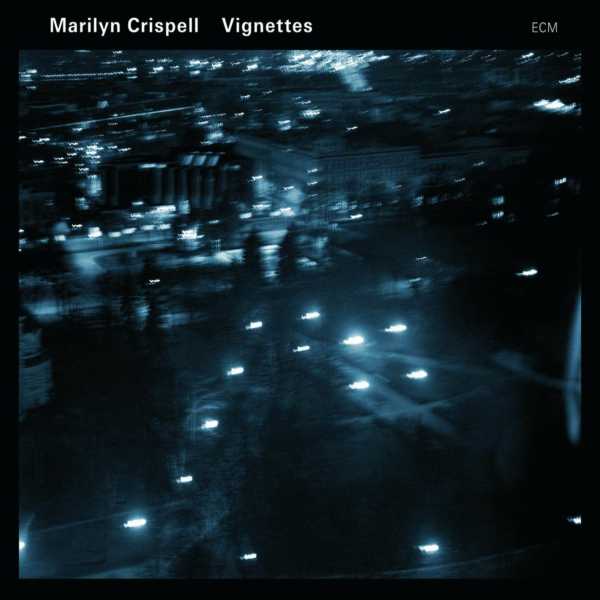
Marilyn Crispell VIGNETTES

Baltimore-raised pianist Marilyn Crispell, a baroque-classical student who jumped ship after hearing John Coltrane's A Love Supreme, went on to become an intelligent and resourceful keyboard partner (over 15 years) for that uncompromising radical Anthony Braxton. In recent times, she has become more reflective - like a more abstract Bill Evans - and Nordic ambient-jazz influences (one of the tracks here is simply called Sweden) have gradually displaced her ferocious intensity. This set of 17 pieces - seven of them entitled Vignettes - is the pianist's debut as an unaccompanied soloist for ECM. There are hints of Paul Bley's lyrical precision and Jarrett's song motifs in this private, slow-moving, but exquisitely articulated, dreamscape. The melodies often bloom, Bley-like, in short motifs on to which asides fall and accumulate, and though there are a few jagged, more intense pieces (such as the hurtling Axis), most of the episodes are meditative. The minimal, treble-note caresses of the three-minute Little Song for My Father is a quiet but momentous testament to the eloquence of music. (

lunes, 10 de abril de 2017

Jonas Kaufmann / Wiener Philharmoniker / Jonathan Nott MAHLER Das Lied Von Der Erde

In an interview that serves as the sleeve notes for his recording, Jonas Kaufmann describes his first encounter as a student with Das Lied von der Erde, in the classic recording conducted by Otto Klemperer. Kaufmann says he immediately tried to emulate Klemperer’s incomparable soloist Fritz Wunderlich in the three tenor songs, but doesn’t reveal whether at that stage he thought he could sing the three other numbers too, which Mahler designated for either a contralto or a baritone. (It’s Christa Ludwig, still unsurpassed, on the Klemperer recording.) Yet here he is tackling all six, in a recording taken from concerts in the Vienna Musikverein last June.
Performances with a baritone rather than a mezzo or contralto as the second soloist appear to have become more common over the last decade, following the example set half a century ago by Dietrich Fischer-Dieskau. Thomas Hampson and Christian Gerhaher, in particular, have showed how effective a second male voice can be. But though Kaufmann’s voice is regularly described as having baritonal qualities, he is not, at this stage in his career at any rate, a true baritone, and there are moments in all three of the contralto songs when he seems to be struggling to muster enough weight of tone to support the vocal line. Parts of the final Abschied are almost crooned, and the repeated closing “Ewig” is virtually toneless.
It’s a triumph of hubris over sound musical judgment, which does nothing for the tonal contrasts between the songs that Mahler carefully built into the work, and has a serious effect on Kaufmann’s performance of the three tenor numbers too. They are a gruelling test for any singer, let alone one who is allowing himself no respite during the other numbers, and even in the opening Das Trinklied vom Jammer der Erde, there’s none of the effortless power, the sense of the voice surfing over the surging orchestral textures, that the greatest interpreters achieve. It all becomes a bit of a struggle.
A real disappointment, then, which isn’t helped by the rather routine orchestral contributions of the Vienna Philharmonic under Jonathan Nott. At best, this is an interesting experiment that really shouldn’t have been enshrined on disc. (Andrew Clements / The Guardian)

domingo, 9 de abril de 2017

Volodos plays MOMPOU

Fans of Catalonian miniaturist Frederic Mompou are used to looking in out-of-the-way places for his music: small labels, encores of recitals. Yet here he is, presented in full major-label splendor by Sony Classical, with a substantial hard-bound booklet, performed by Russian pianist Arcadi Volodos. It may be that confusing times are good for the reputation of this most inward of composers, but whatever the reason, this recording will introduce a lot of people to Mompou's fascinating world. His music is essentially a compressed version of the Impressionist language, with dashes of Satie's elliptical mode and perhaps the mysticism of Scriabin. Mompou goes further in the directions of both dissonance and diatonic harmony than did the Impressionists, and his use of simple harmony as a kind of color effect is unique in the entire concert music repertory. Some people are completely puzzled by Mompou, most of whose music proceeds at the same basic slow-to-moderate tempo. Try Volodos out! He has the knack of getting strong profiles of individual phrases while still keeping the whole thing at a sort of glimmering level. You can get a foothold with the Musica callada XV (track 20), which seems to take Chopin's Prelude in E minor, Op. 28/4, as a point of departure. From its opening figure the listener is drawn into Mompou's murky yet gentle world, which some filmmaker ought to exploit. The difficult-to-translate Musica callada (¡callate!, be quiet, mothers say to their children; "Music that Has Become Quiet" is close) is Mompou's greatest work; in it, his extremely concise language, almost completely eschewing motivic development, is brought to a fascinating extreme. Volodos has the control to get something like the last bars of Schubert's Winterreise out of the music here: it really does seem to exist on the lip of nothingness. Strongly recommended for all, and really something of a milestone. (James Manheim)

sábado, 8 de abril de 2017

Volodos plays BRAHMS

Four years after his fascinating and highly praised album with works of the Spanish composer Mompou, Arcadi Volodos went into the Berlin Teldex Studio again to deliver another reference recording, this time with the music of Johannes Brahms. Volodos has played the Brahms solo pieces over the past years in places all over the world and received highest critical acclaim for his interpretation. The Brahms solo works are perfect to show Volodos unique ability to create a special and magic sound, a sound “which lifts us, the listener, into the air and which makes us believe that the world is floating" (Frankfurter Allgemeine Zeitung). Recorded in the famous Teldex Studios Berlin in three sessions (2015 - 2017) on a great Steinway Grand Piano specially tuned by Michel Brandjes, one of the best tuners in the world. There is no editing in this recording. Volodos played every piece over and over again to develop his idea of structure and sound and chose the best version of each piece after the end of the recording. (Presto Classical)